In the fifth year of the full-scale war, migration attitudes within Ukraine show a stabilisation of pragmatic choice: Ukrainians are increasingly choosing to stay at home, despite persistent security and financial challenges. Those who remain are increasingly guided not only by emotional motives, but also by an assessment of practical quality of life. This is evidenced by the results of a survey on migration factors conducted by Gradus. The results of this survey wave were presented at the Ukraine Recovery Conference 2026.
The desire to leave the country is noticeably declining
Ukrainians who are currently in Ukraine demonstrate stronger rootedness than before. The share of respondents considering the possibility of going abroad to receive temporary protection has decreased from 41% to 33% compared with 2024.
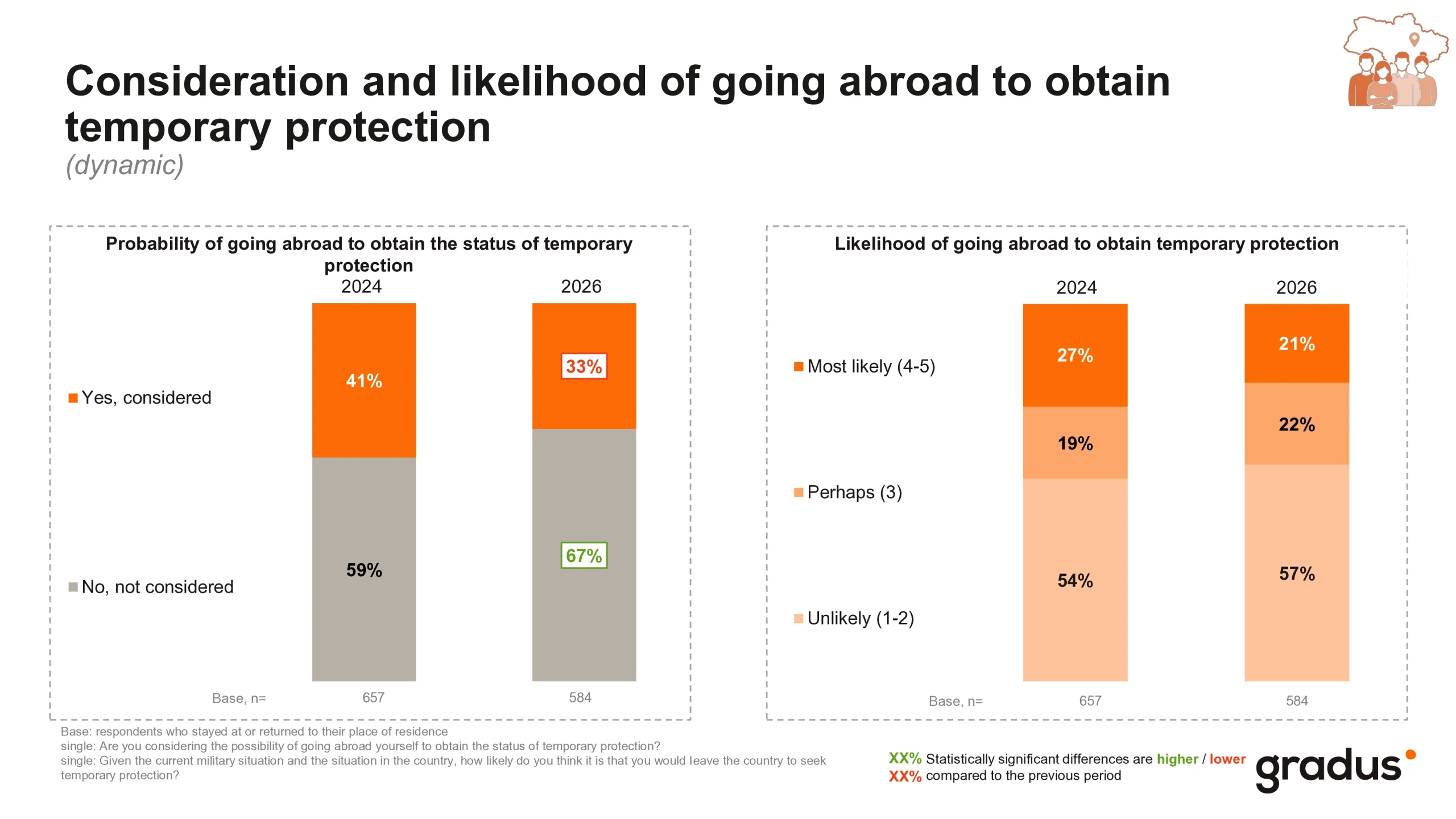
Experience also matters: Ukrainians who had previously gone abroad but later returned are the most likely to consider leaving again (45%). Migration intentions are least common among people who have not left their permanent place of residence at any point during the war.
Survival, quality of life and children’s future
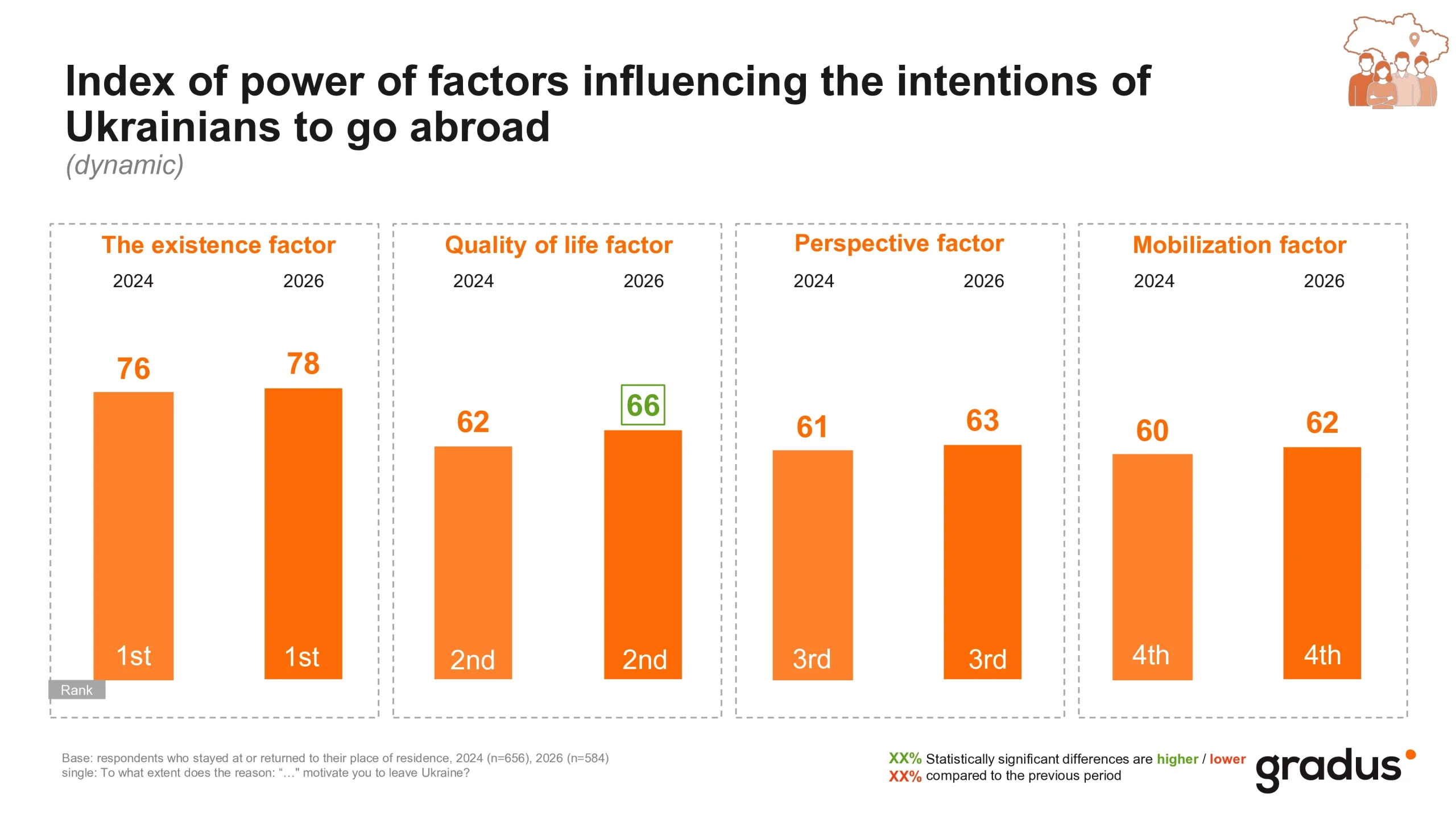
The drivers that may prompt Ukrainians to leave the country have changed little over the years, but they are acquiring new nuances. Survival and security remain the key factors. At the same time, the desire for normal living and financial conditions is gaining weight: the significance of the quality-of-life factor has increased from 62% to 66%. The main catalysts here are financial difficulties, whose weight has increased from 53% to 59%, as well as the effect of an “empty circle” — the departure abroad of close people, friends and relatives, which has risen from 31% to 38%.
Having children significantly affects migration intentions, but the key trigger is their age and the life stages associated with it. The study shows that parents of children aged 4–6 and 13–17 demonstrate the strongest inclination towards migration. This choice is purely pragmatic and linked to preparation for the future: parents seek to take their children abroad before the start of school or ahead of university admission in order to ensure a stable and safe educational process.
What keeps people in Ukraine: quality of life outweighs pure patriotism
The decision to stay in Ukraine today is a pragmatic choice. The study shows that although patriotic attitudes hold people emotionally, they are the least important factor in terms of strength index, at just 52%.
Instead, the key retention factors are practical quality of life (66%) and social cohesion (65%). The ability to provide normal conditions for the family and having housing at home are more important for women (68% compared with 64% among men). Social cohesion and a pro-Ukrainian environment are strongest in retaining young people aged 25–34 (65%) and middle-aged people aged 45–54 (66%).
A critical view of the future and demand for negotiations
Despite the readiness to live in Ukraine, there is no consensus in society regarding the country’s development. Almost half of the population (45%) believe that the situation in the country is moving in the wrong direction, while only around a third (36%) assess the development vector positively. Ukrainians name the war (88%) and systemic corruption in state institutions (74%) as the main internal enemies.
Forecasts regarding the end of the war are becoming increasingly long-term. The largest share of respondents (43%) tend to believe that active hostilities will continue for many years, while another 34% cannot determine any timeframe at all.
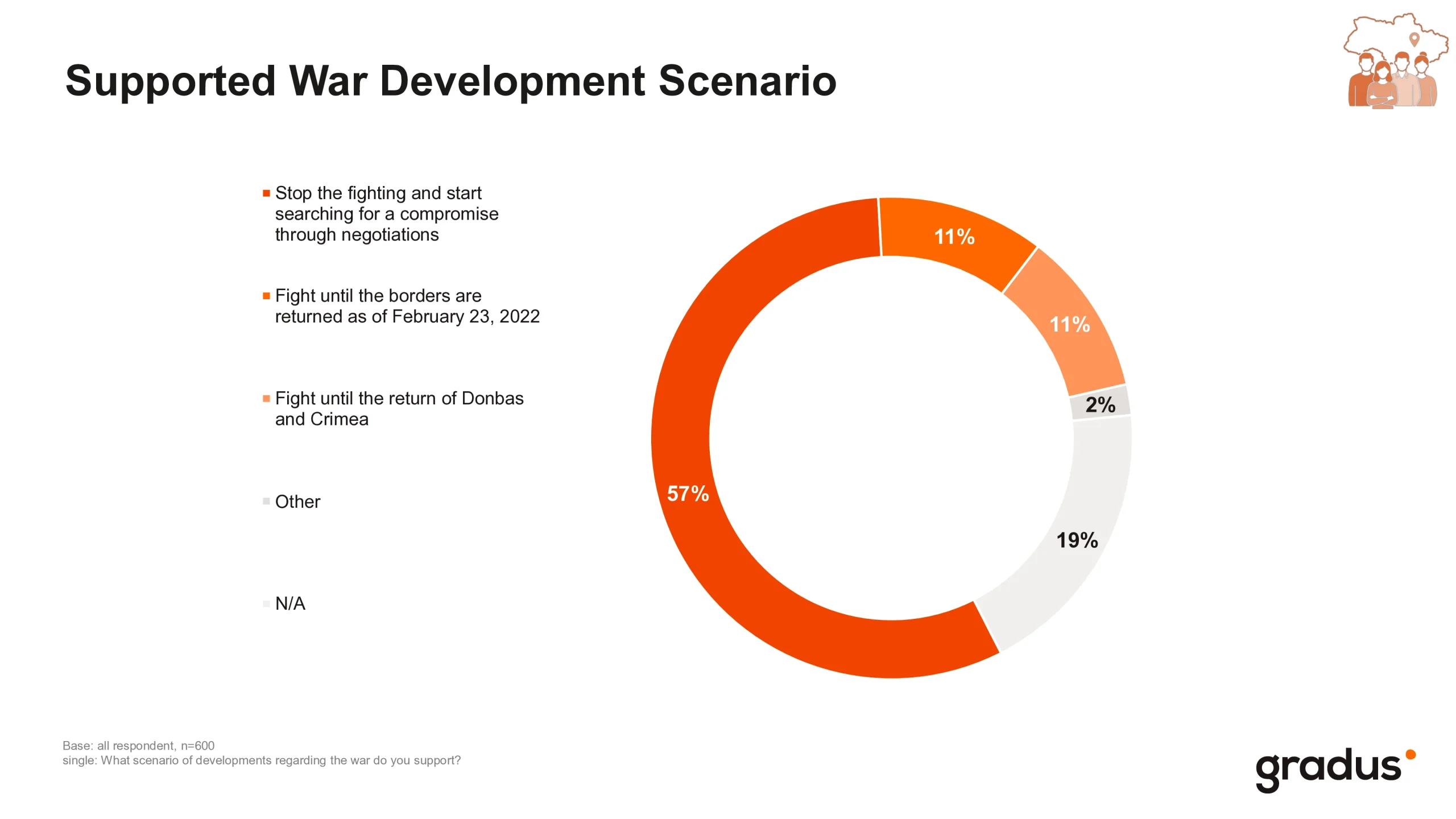
Against this backdrop of uncertainty, a pragmatic demand for diplomacy is growing within society: 57% of respondents support the search for a compromise to end the hostilities. Moreover, 66% of Ukrainians generally approve of the idea of negotiations, while 67% consider a negotiated scenario to be the most realistic path to peace.
“The survey results indicate a deep rationalisation of the behaviour of Ukrainians within the country. The psychological factor and emotional patriotism are giving way to a sober assessment of reality. People see internal problems, such as corruption, and are preparing for a prolonged war, which is why the share of those ready to uproot themselves and move abroad into the unknown is declining. Today, the key dilemma for Ukrainians in Ukraine lies in balancing security threats and economic difficulties with the advantages of rootedness and maintaining a familiar life at home. Therefore, in order to prevent further migration, the focus should shift towards ensuring a basic quality of life,” summarises Evgeniya Blyznyuk, sociologist, founder and CEO of Gradus.
To receive the full version of the report, please send a request to media@gradus.app
The survey was conducted by the research company Gradus using a self-administered questionnaire in the Gradus mobile app. Target audience of the survey: men and women aged 18–60 living in Ukraine. Fieldwork period: 5–14 May 2026. Sample size in Ukraine: 600 respondents.