Ukrainians are approaching the coming winter with possible disruptions to everyday life in mind. Prolonged power, water or heating outages are seen not simply as household inconveniences, but as a risk to basic predictability and stability. At the same time, people are not putting their normal lives on hold in anticipation of potential difficulties. Instead, they are adapting their homes to possible disruptions, assessing how long they could cope and identifying the point at which they might consider relocating.
A new Gradus survey conducted in September 2026 explored the scenarios Ukrainians are considering and the main factors that could make spending the winter at home difficult.
Dependence on centralised utility networks remains high
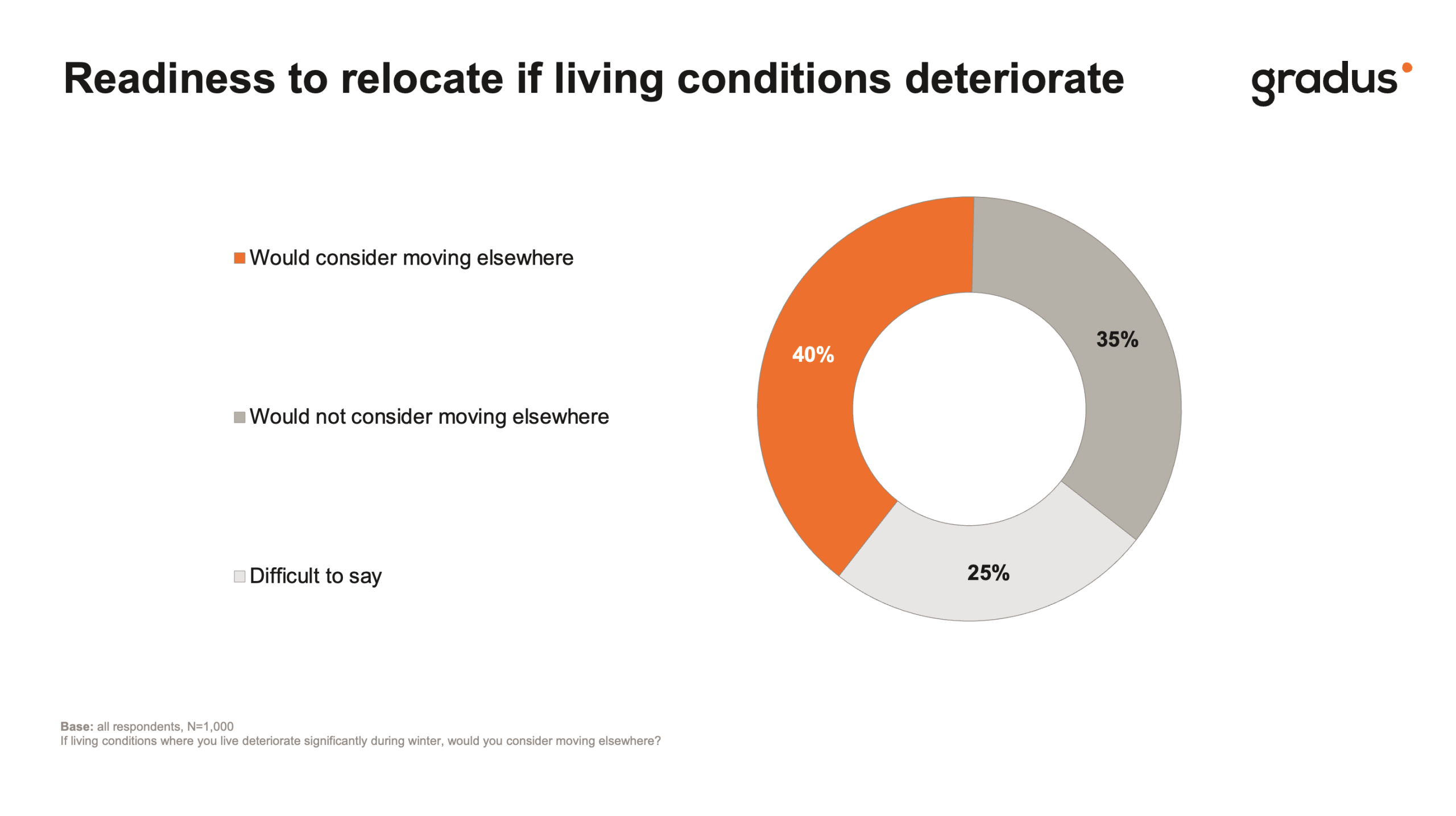
Most respondents are preparing to cope with possible disruptions to electricity, water and heating while remaining in their homes. At the same time, 40% are prepared to consider a “Plan B” — relocating if living conditions in their area deteriorate significantly. Another 35% say they would not plan to move even under such circumstances.
Preparation for difficult conditions is primarily taking place at the household level. However, relatively few respondents consider their homes fully self-sufficient. Some 42% live in homes connected to municipal utility systems and do not have the equipment needed for independent heating or electricity supply, or sufficient water reserves. Another third have some of this equipment but remain dependent on municipal infrastructure. Only one in ten respondents describe their household as fully autonomous.
The experience of the previous winter has not led to widespread investment in autonomous household systems. For most people, preparation remains a way to provide a backup in case of disruptions rather than an attempt to eliminate dependence on centralised networks altogether.
Safety will continue to shape potential relocation plans
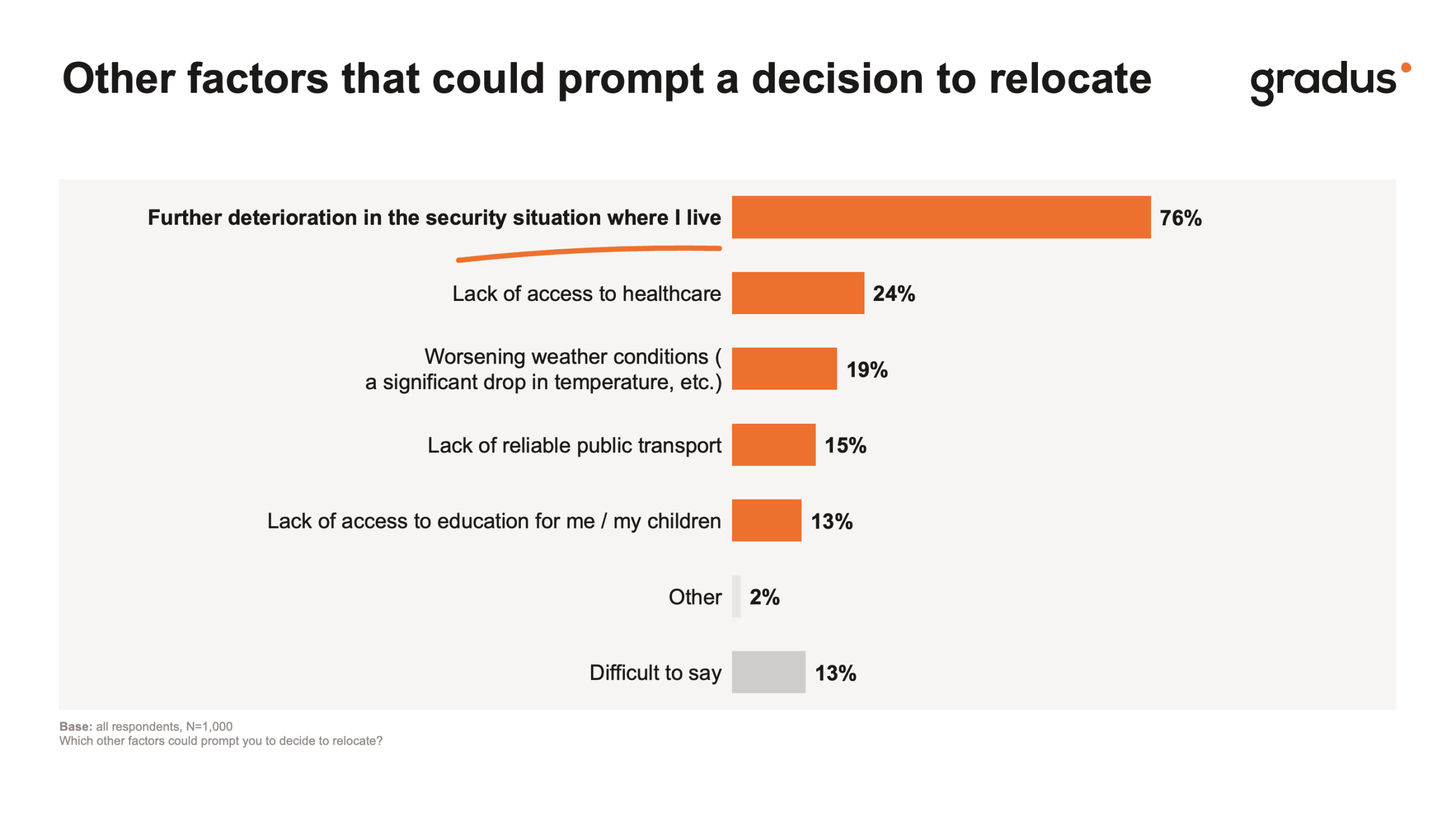
Safety remains by far the leading factor that could prompt people to relocate. Other reasons, cited considerably less often, include lack of access to healthcare, a significant deterioration in weather conditions, unreliable public transport and lack of access to education.
Among utility-related concerns ahead of winter, prolonged power cuts rank highest, cited by 69% of respondents. Lack of water is considered a critical issue by 58%, while 48% point to disruptions to heating.
For most people, a decision to relocate is unlikely to be triggered by a single inconvenience. Rather, it is likely to result from a combination of risks: when infrastructure disruptions are compounded by safety concerns and problems with access to healthcare, education or other essential services, people become more likely to reconsider where they live.
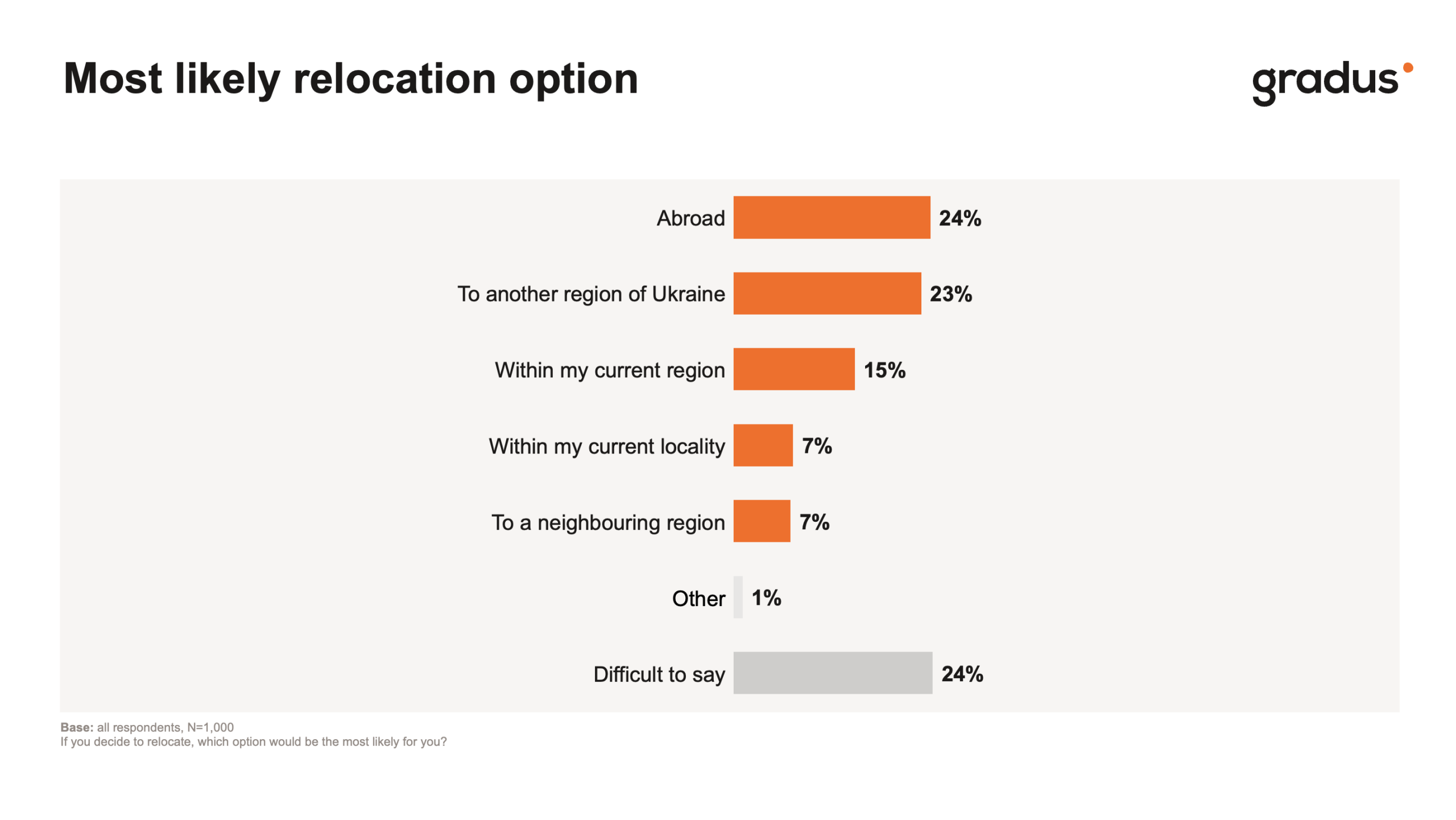
Relocation would not necessarily mean leaving Ukraine. If they decided to move, one in five respondents would consider going abroad, while almost one in two would consider temporary relocation within Ukraine — either close to their current place of residence or to another region.
Adaptation and resilience have their limits
Attitudes ahead of winter suggest that Ukrainians have already learned to adapt to instability. As long as problems remain manageable, people are more likely to find ways to adjust: stocking up on essential supplies, using temporary solutions and preparing alternatives. Relocation becomes an option when instability begins to feel permanent and threatens their basic quality of life.
“There is an important shift in how Ukrainians are approaching the coming winter: they are increasingly less likely to see resilience as the ability to endure any hardship indefinitely. People are assessing whether they will be able to maintain a basic standard of living under unstable conditions, how prepared they are themselves, and whether their city or community can provide the conditions they need. Today, adaptation therefore means being ready to act under different scenarios rather than constantly expecting the worst. People are not panicking about possible difficulties, but nor are they relying on the assumption that things will somehow work out. They are assessing risks and preparing backup options,” comments Evgeniya Blyznyuk, sociologist, founder and CEO of Gradus.
The survey was conducted by Gradus using a self-administered questionnaire in the Gradus mobile app. The sample reflects the population structure of Ukrainian cities with more than 50,000 residents among people aged 18–60, excluding temporarily occupied territories and areas of active hostilities. Fieldwork was conducted on 4–7 September 2026. Sample size: 1,000 respondents.