On the eve of the International Day of Families, the research company Gradus surveyed Ukrainians to find out how they perceive the family today, evaluate the quality of family relations, and what most affects the level of satisfaction with family life. The results demonstrate a high level of cohesion in families, but the perception of family relations differs significantly depending on age. Representatives of the older generation are much more likely to talk about emotional closeness, mutual support, and the ability to constructively overcome difficulties, while young people evaluate the atmosphere in the family more critically and more often point to problems in communication or the distribution of roles.
Family remains an important value
Although Family Day is not yet a mass holiday, it has greater significance for certain age groups. In general, almost 14% of Ukrainians celebrate it, but among people aged 25–34 — already 20%. In the same group, 23% call the strengthening of family relations one of their main life priorities. This is logical, because for young people, who are often at the stage of creating their own family, planning, and having children, the topic of family becomes especially relevant
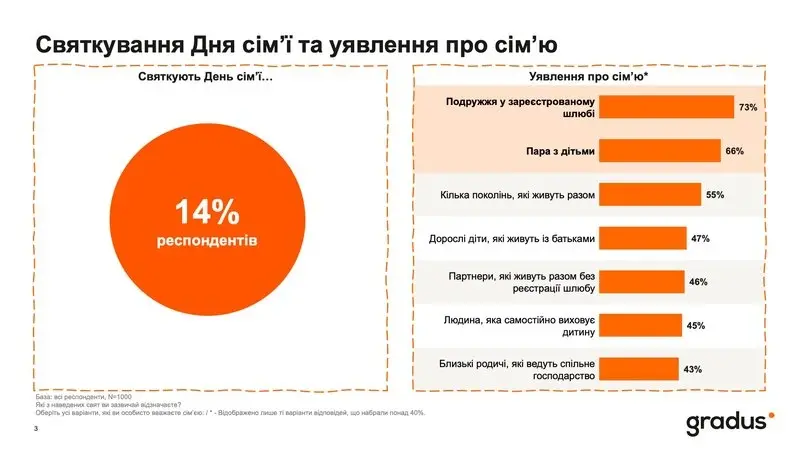
Ideas about what kind of family Ukrainians consider “real” remain quite traditional. Most often, this format is called spouses in a registered marriage, a couple with children, and several generations living together.
Youth evaluates family relations much more critically
The average level of satisfaction with family among surveyed Ukrainians is 5.3 out of 7.
The most noticeable differences in assessments relate to the emotional quality of relationships. 83% of Ukrainians aged 55–60 talk about a feeling of closeness between family members, while among youth aged 18–24, this figure is only 62%.
A similar situation is with the family’s ability to adapt to changes: 70% of older respondents are convinced that their family can flexibly change the usual order of life, roles, and rules according to the circumstances, while among the youngest, only 53% think so.
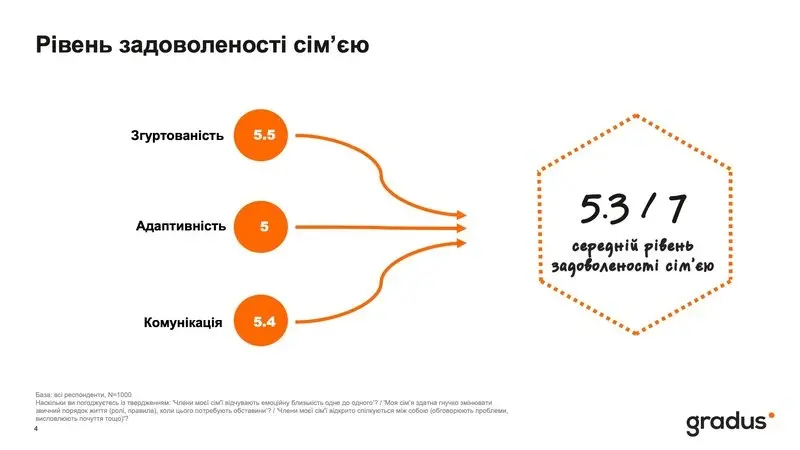
Young people also more often point out difficulties in communication. While among respondents aged 55–60 only 8% talk about problems with discussing difficult topics and expressing feelings, among youth aged 18–24 there are already 21% of such people. 70% of representatives of the older age group and only about half of the youngest respondents claim the ability to constructively resolve conflicts without long-term negative consequences.
The opportunity to be oneself in the family without judgment and criticism is noted by 84% of respondents aged 55–60, while among youth this figure is 63%. 78% of older Ukrainians and only 60% of young ones see shared values and a similar outlook on life in their families.
Women are more often dissatisfied with the distribution of household roles
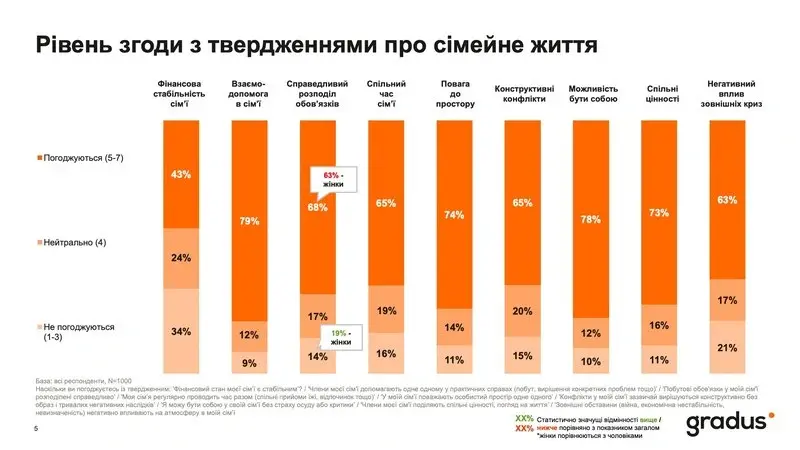
The fact that family members help each other is more often noted by men (83%) than women (75%). By age, the difference is even more noticeable: among older respondents, 87% confirm this, while among youth — 67%.
74% of men and 63% of women consider the distribution of household chores fair. Most often, representatives of the older generation talk about fair distribution (77%), least often — youth (57%).
46% of men and 38% of women consider the financial situation of their family to be stable. Respondents aged 25–34 feel most confident: almost half of them assess the family’s financial situation as stable.
The war remains the main external factor of tension
Regardless of age or gender, Ukrainians almost unanimously speak about the negative impact of external crises on the atmosphere in the family.
62% of respondents note that the war, economic instability, and uncertainty about the future negatively affect family life.
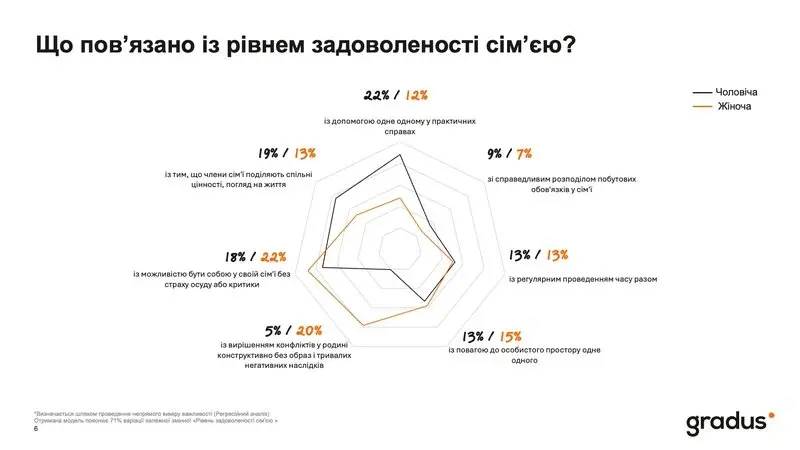
At the same time, the study shows that the level of family satisfaction is most related not to financial factors, but to the quality of interaction between family members — mutual assistance, shared values, the opportunity to be oneself without fear of judgment, and the ability to constructively resolve conflicts.
It is significant that the differences in the views of men and women on family relations are much smaller than between different generations. The noticeable contrast between the assessments of younger and older respondents primarily reflects different life experiences and a changing approach to relationships. Older generations have already survived more than one personal and external crisis, while young people are just entering adulthood and learning to build partnerships and find a balance between autonomy and closeness amid the challenges of war. At the same time, the younger generation has higher expectations regarding emotional comfort, personal boundaries, and fair distribution of roles in the family, therefore it evaluates the quality of family interaction more demandingly, — comments sociologist, founder and CEO of Gradus Evgeniya Bliznyuk.
The study was conducted by the research company Gradus using the method of self-completion of a questionnaire in the Gradus mobile application. The sample reflects the population structure of cities with more than 50,000 residents aged 18–60 by gender, age, settlement size, and region, excluding temporarily occupied territories and areas of active combat zones. Fieldwork period: May 6-7, 2026. Sample size: 1,000 respondents.
*The full research report is available for download via the form below.