Report
Do Ukrainians Support the Dismissal of the Government?
How did the public react to the government reshuffle?

* The report is available for download via the form below

Regular enemy attacks on Ukraine’s energy system against the backdrop of the coldest winter in the last four years greatly complicate the daily lives of Ukrainians. Despite this, problems with electricity, water supply, and heating are not yet a reason for the majority to change their place of residence. A survey conducted by Gradus in January 2026 showed that the majority of respondents do not plan to relocate unless the situation becomes critical. Only in extreme cases does a small proportion of people consider a temporary departure with a return after the situation is resolved.
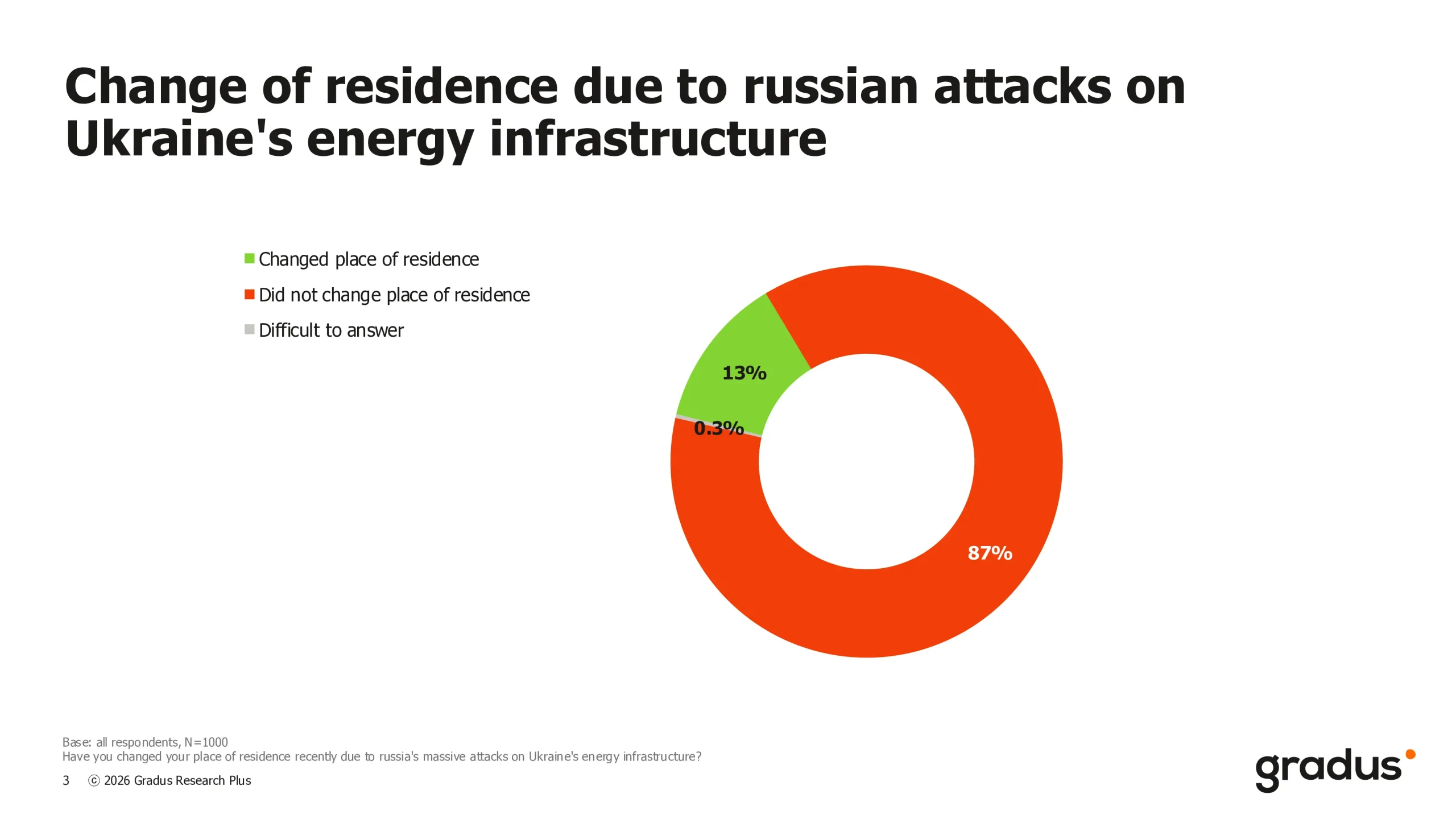
The study showed that 87% of surveyed residents have not changed their place of residence due to attacks on the energy sector and related domestic difficulties. The most mobile were residents of the East and Kyiv – the regions suffering the most from attacks on the energy infrastructure. From these regions, 21% and 18% of the surveyed temporarily moved, respectively.
Among the 13% of those who were forced to migrate due to energy hardships, 60% moved within their own region, and another 50% – to another region within Ukraine. The majority of respondents intend to return to their permanent place of residence after it gets warmer and as soon as the security situation allows. However, a significant proportion of residents of the Eastern and Northern regions (16% and 22% respectively) do not plan to return for now.
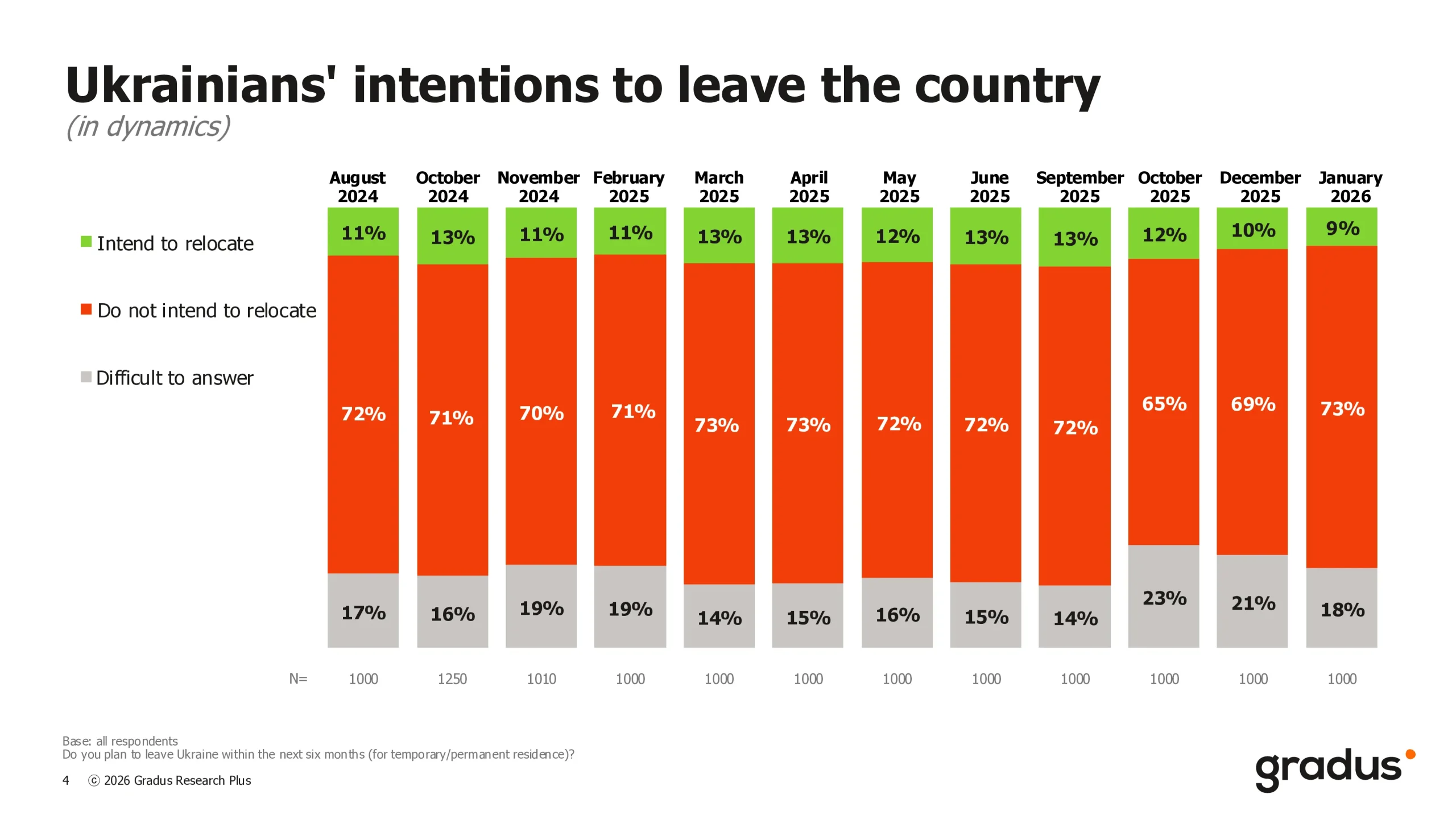
Less than 10% of respondents intend to leave Ukraine within the next six months, which corresponds to the level of migration intentions in previous Gradus surveys. Thus, intensive attacks on the energy infrastructure have not led to an increase in migration intentions.
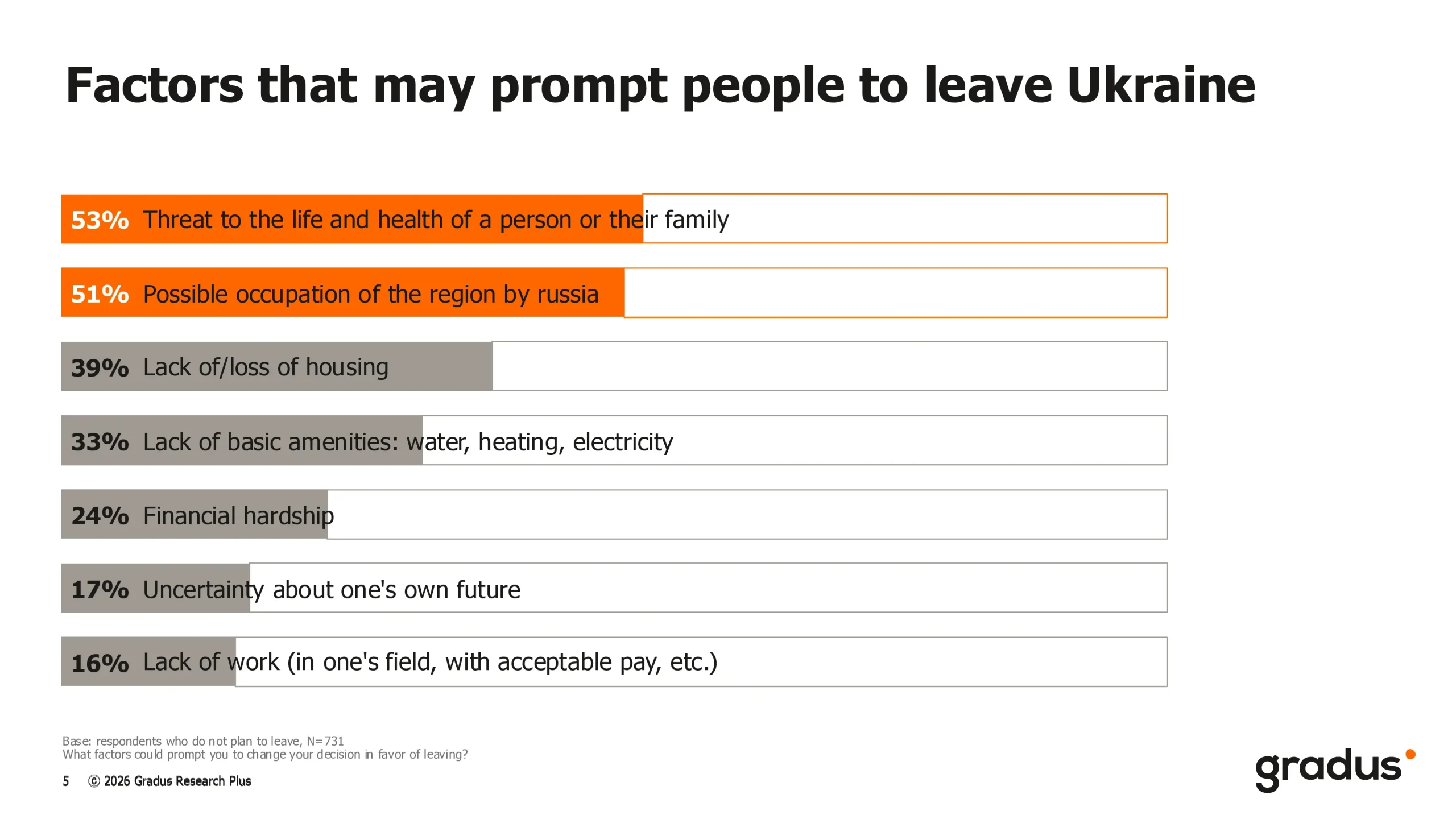
Among the factors that could prompt a change of decision in favor of leaving, the most significant are the threat to one’s own or family members’ life and health, the possible occupation of the region by Russia, the loss of housing, or the lack of basic living conditions: water, heating, and electricity. At the same time, the lack of living conditions is still not in the first place among possible reasons for changing residence.
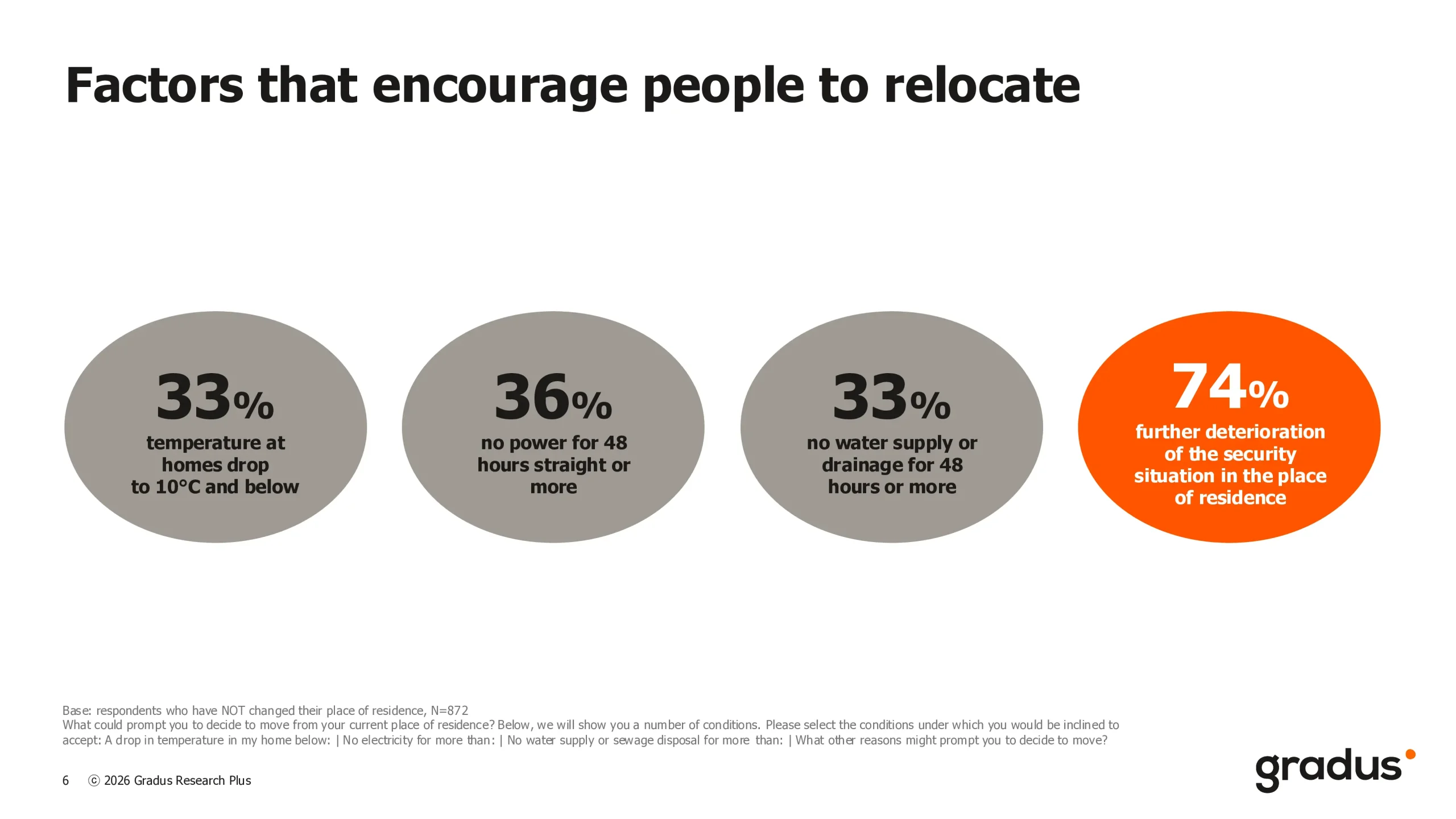
In the event of further deterioration of the situation and living conditions, less than half of the respondents (43%) are ready to change their current place of residence. Factors that would stimulate such a decision could be: a drop in temperature in the dwelling below 10°C, lack of electricity, water supply, or sewage for more than 48 hours consecutively. However, as before, the only significant reason to leave the current place of residence remains a further deterioration of the security situation.
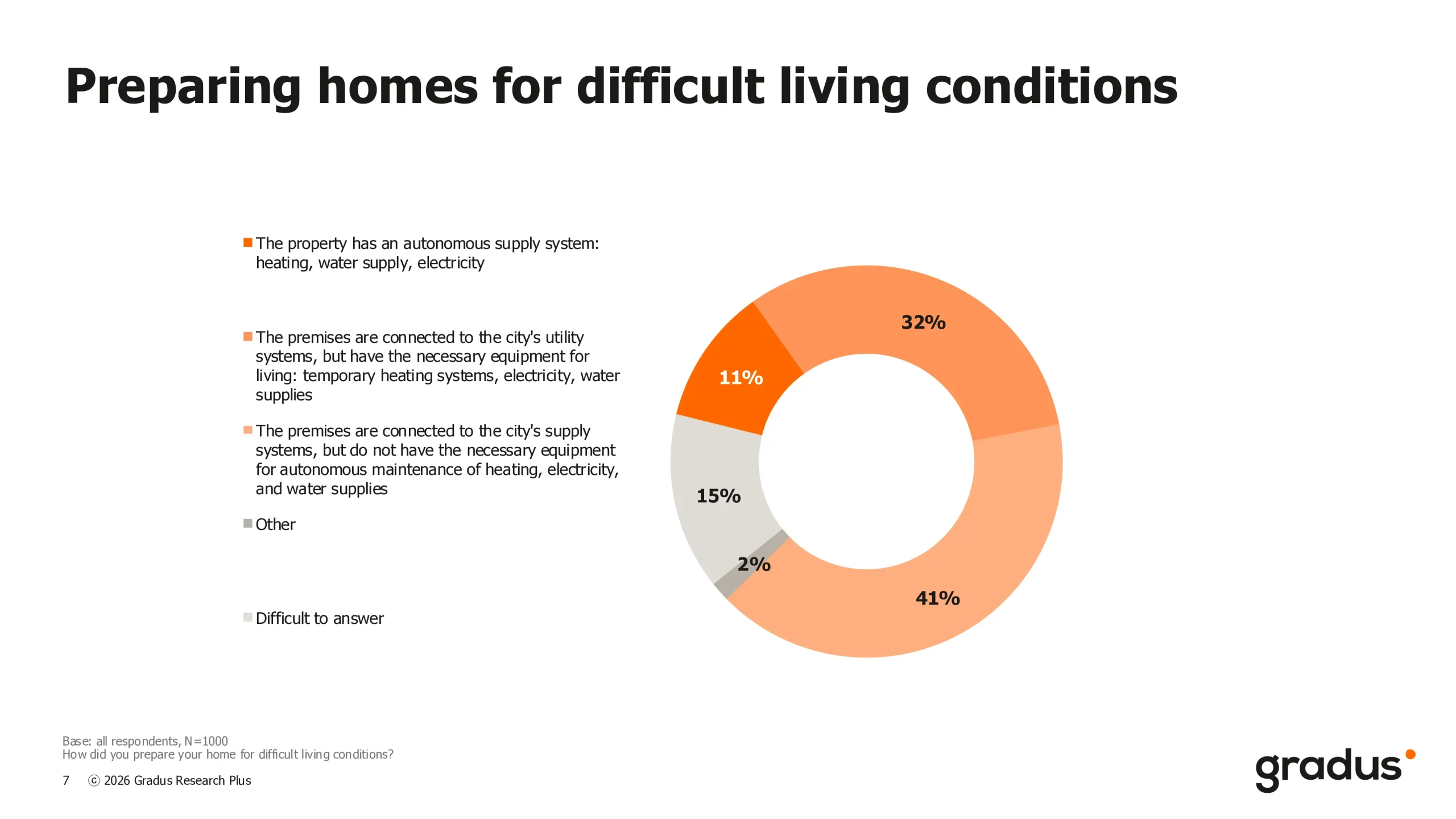
A significant proportion of respondents prepared their homes in advance for a difficult winter by installing the necessary equipment or even having autonomous supply. However, the same proportion does not have the necessary equipment and is completely dependent on public utilities.
Ukrainians who chose to stay home during the war are not inclined to change their decision under the influence of such severe circumstances as the lack of living conditions and cold. Even a possible radical deterioration in the quality of life could be a reason for leaving for only a third of respondents, and even then, for a short period.
This indicates that the tactic of energy terror used by Russia significantly complicates the lives of Ukrainians, but is not a factor that could trigger a repeat of the migration wave we observed in the first months of the full-scale invasion. After the current winter, the population will approach the preparation of their homes and daily lives for the next cold season even more carefully.
— comments Yevheniia Blyzniuk, sociologist, founder and CEO of the research company Gradus.
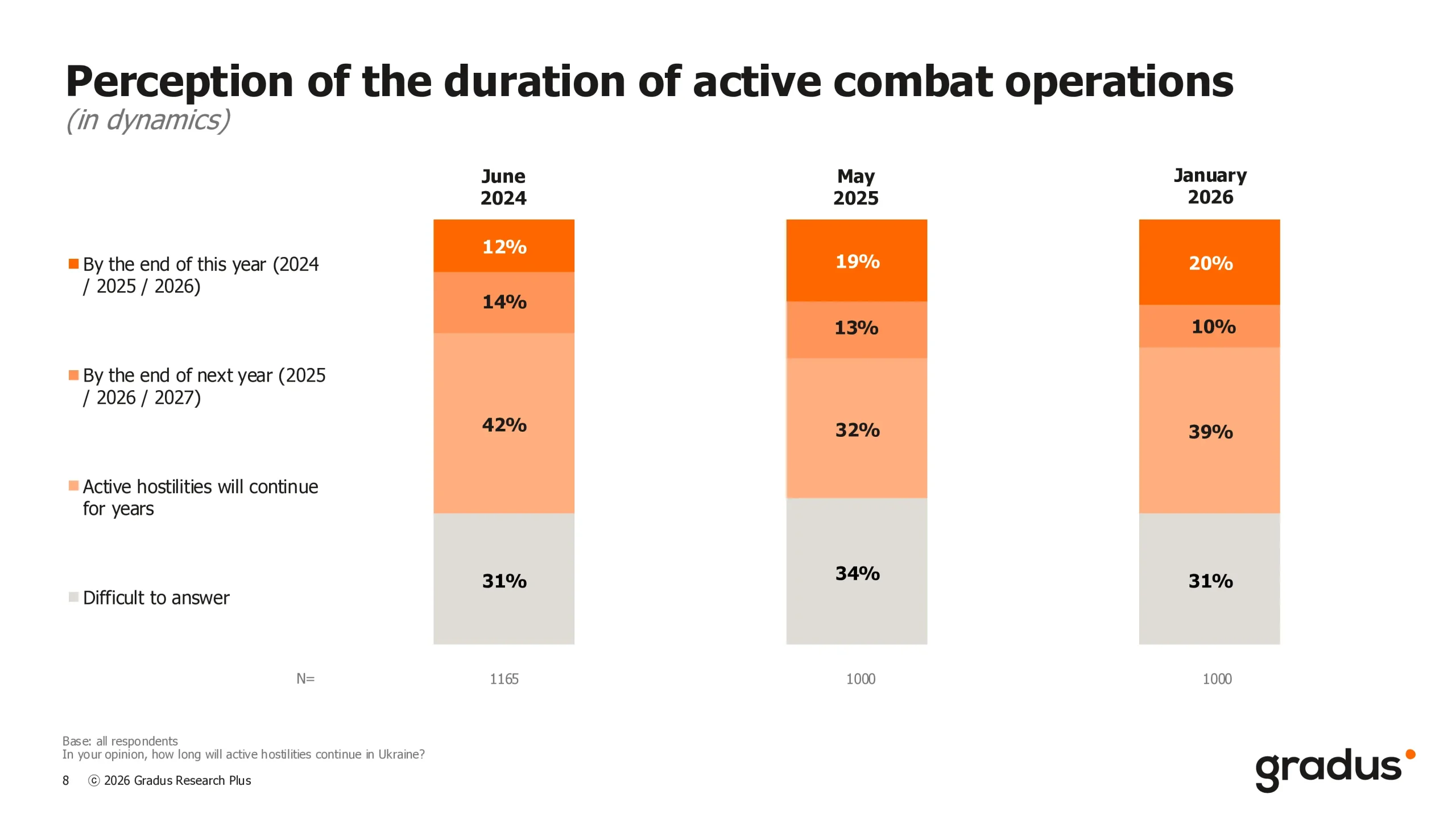
In general, expectations of a protracted war remain unchanged. This indicator reacts much less to any peace initiatives or negotiations than at the beginning of 2025.
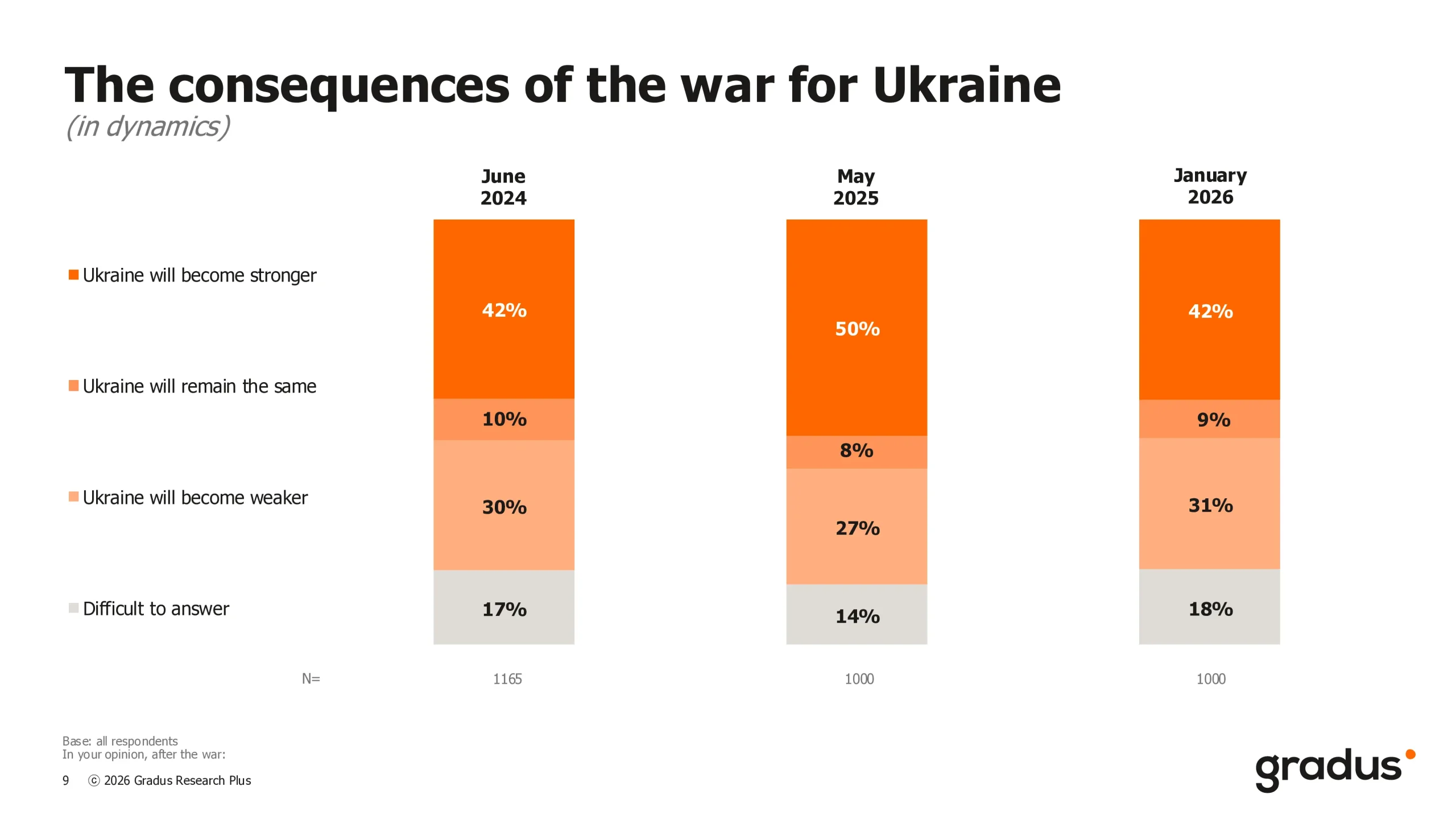
However, despite the harsh winter and the prospect of a prolonged war, a significant proportion of respondents remain optimistic and expect that Ukraine will emerge stronger as a result of this war.
The study was conducted by the research company Gradus using a self-administered questionnaire in the Gradus mobile application. Target audience: men and women aged 18–60 living in Ukrainian cities with a population of over 50,000, excluding temporarily occupied territories and active combat zones. Period of conduct – January 22, 2026. Sample size: 1000 respondents.
Table of content
How did the public react to the government reshuffle?

How Do Ukrainians Perceive Employers and What Do They Expect from Them?

The third wave of the migration survey, presented at URC 2026
Gradus conducted a special survey for Ukraine’s Constitution Day 2026

Insights from the second wave of Gradus' HR study on employee well-being, career expectations, and workplace trust.

Gradus has unveiled the third wave of its research on the factors influencing the return of Ukrainian migrants residing in th...