Gradus presents the first digital-ethnographic study of the daily practices of Ukrainians in 2025. The format combined live diaries, photo and video observations, and in-depth interviews. This approach allows for recording behavior not at the moment of a survey, but in real life — in the small details that do not always fall into the focus of classical research.
Over the course of seven days, participants from six major cities in Ukraine documented their rituals, emotions, food and consumer habits, ways of coping with stress, and media consumption. The method provides access to behavior that usually remains “behind the scenes”: spontaneous decisions, reactions to alarming news, and daily compromises between plans and reality.
Morning rituals as a stability system
The data shows: morning has become a key anchor point. Participants form complex sequences of actions that help maintain a routine and control the day. “Buffer time” — the opportunity to wake up 30–40 minutes earlier, make coffee, tidy up the space, or dedicate time to oneself — turns into a tool for emotional protection.
Reliable rituals are linked to the need for stability in conditions of unpredictability and the constant pressure of war. The quality of the morning determines the sense of control and energy level for the entire day.
Parasitic habits and the struggle for attention
Two lines prevail in digital behavior: the desire to give up excessive scrolling and simultaneous dependence on it. Most start the morning with social networks, although they admit that it worsens their mood. In moments of crisis, people return to endless feed content — it is a way to calm down, which ultimately disrupts daily rhythms.
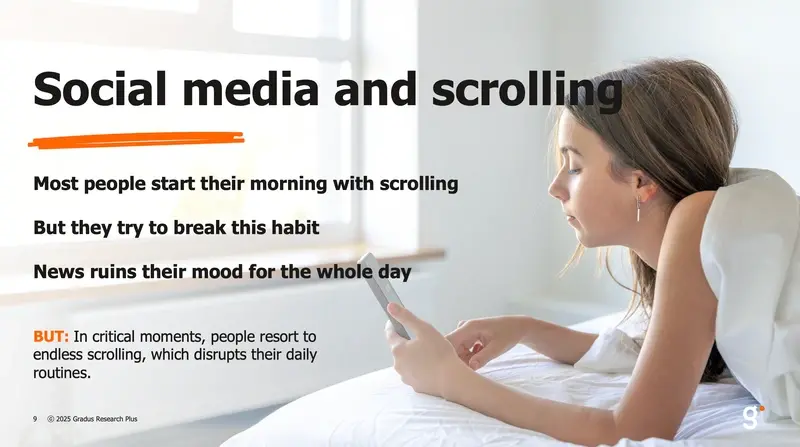
Despite intentions to reduce the information load, avoiding news content for a long time is rarely successful.
Eating behavior: emotions on a plate
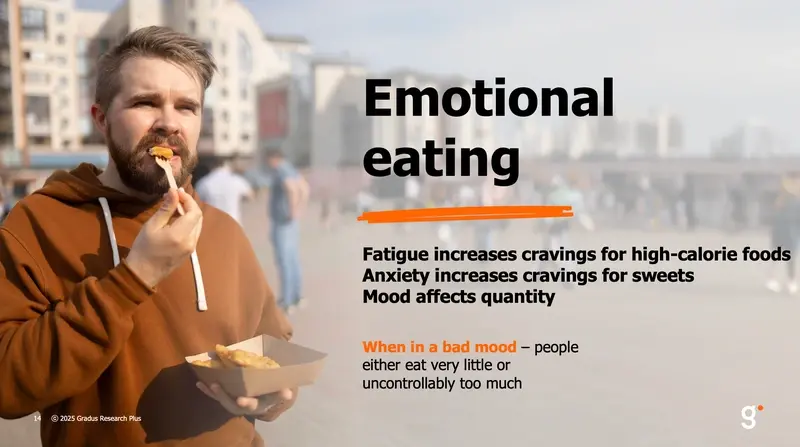
Nutrition is significantly influenced by emotional state. Anxiety, fatigue, and low mood correlate with a craving for sweets and high-calorie foods. Participants often skip daytime meals due to stress, which ends in overeating in the evening or junk-food snacking.
Impulsive snacking forms a background feeling of “incompleteness” and self-reproach, and the cycle — strict diet → breakdown → reward → guilt — becomes a typical model of “almost healthy living.”
In parallel, a culture of “small joys” is forming: aesthetic food presentation, stocking up on favorite products “just in case,” and creating a comfortable space in the kitchen. These are components of a broader phenomenon — emotional economy, in which stability is built through small predictable decisions.
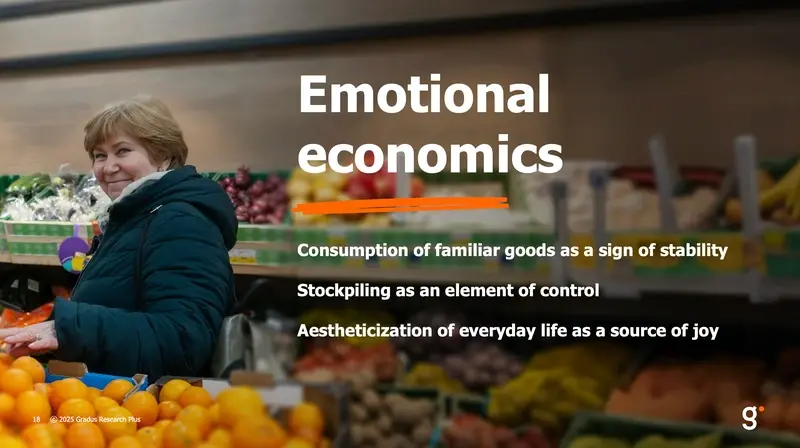
Shopping remains a tool for quick emotional compensation but does not go beyond the rational: purchases are mostly inexpensive, predictable, and comfortable.
Digital ethnography shows not what people declare about themselves, but how they live. This is data on micro-decisions, rituals, methods of self-regulation, and reactions to uncertainty. It is these that provide a realistic picture of the everyday life of Ukrainians,
— comments Evheniya Blyznyuk, sociologist, CEO and founder of Gradus
The study was conducted in September 2025 using the digital ethnography method: 7-day diaries, photo and video recording, and two cycles of in-depth interviews. Geography: Kyiv, Kharkiv, Odessa, Dnipro, Lviv, Zaporizhzhia. The sample included 20 participants aged 18–45. Data collection and processing were carried out by the Gradus team.
The research report is available on a commercial basis upon request at dn@gradus.app
Report structure:
- Morning rituals and day structure;
- Rituals across all spheres of life;
- Eating behavior and habits;
- Stress and ways to overcome it;
- Consumer patterns and shopping;
- Media consumption and digital habits;
- Leisure and social connections;
- Urban characteristics and the context of war;
- Social activity of youth.
Want to see the bigger picture?
The “Digital Ethnography of Ukrainians 2025” report provides a deep understanding of today’s trends, but the world changes every day. To always stay up to date with public sentiments and consumer behavior, sign up for a Gradus Subscription.
A subscription is more profitable than individual reports:
- Annual access to systematic monitoring of trends;
- Relevant insights immediately after data updates;
- The ability to choose one of the ready-made packages or form your own list of reports with a discount.
Pay less — get more insights.
You can purchase the “Digital Ethnography of Ukrainians 2025” report or set up a Gradus Subscription upon request to the email dn@gradus.app