Report
Work remains Ukrainians’ main anchor
Results of the “Quality of Life Barometer 2026” Study, Conducted in Collaboration with the EBA


The full-scale war continues to define not only the security situation in Ukraine but also social moods, emotional states, and visions of the future. The research company Gradus conducted an annual measurement of Ukrainian sentiment on the eve of the fourth anniversary of Russia’s full-scale invasion of Ukraine. According to the survey results — despite fatigue and rising anxiety — the majority of Ukrainians maintain faith in the Armed Forces of Ukraine (AFU) and link long-term security to the country’s defensive capability.
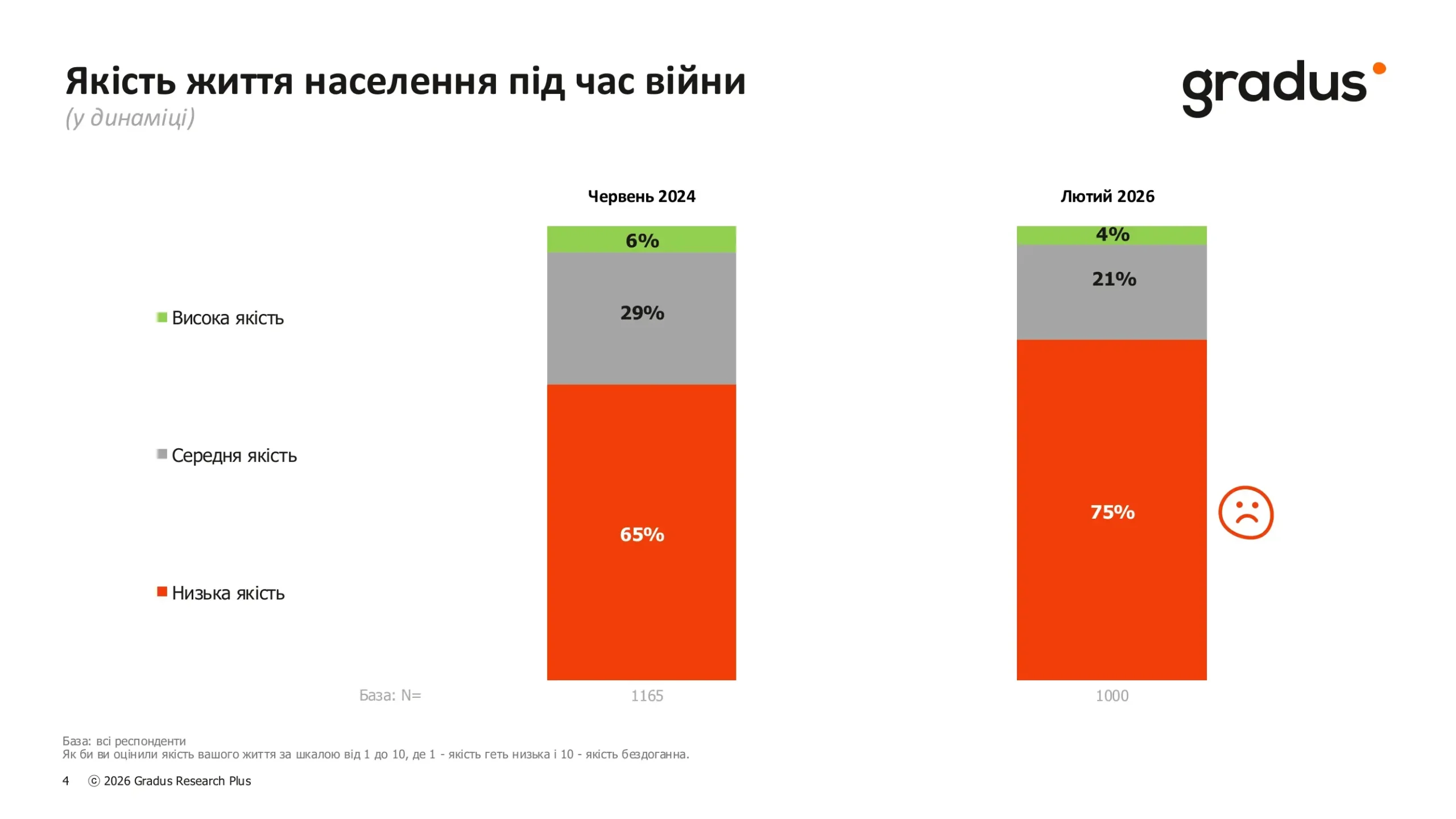
The assessment of quality of life during the war shows a deterioration. In June 2024, 65% assessed their quality of life as low; in February 2026, it is 75%. The share of those who consider it average decreased from 29% to 21%. This reflects the cumulative effect of a prolonged war on the daily lives of citizens.
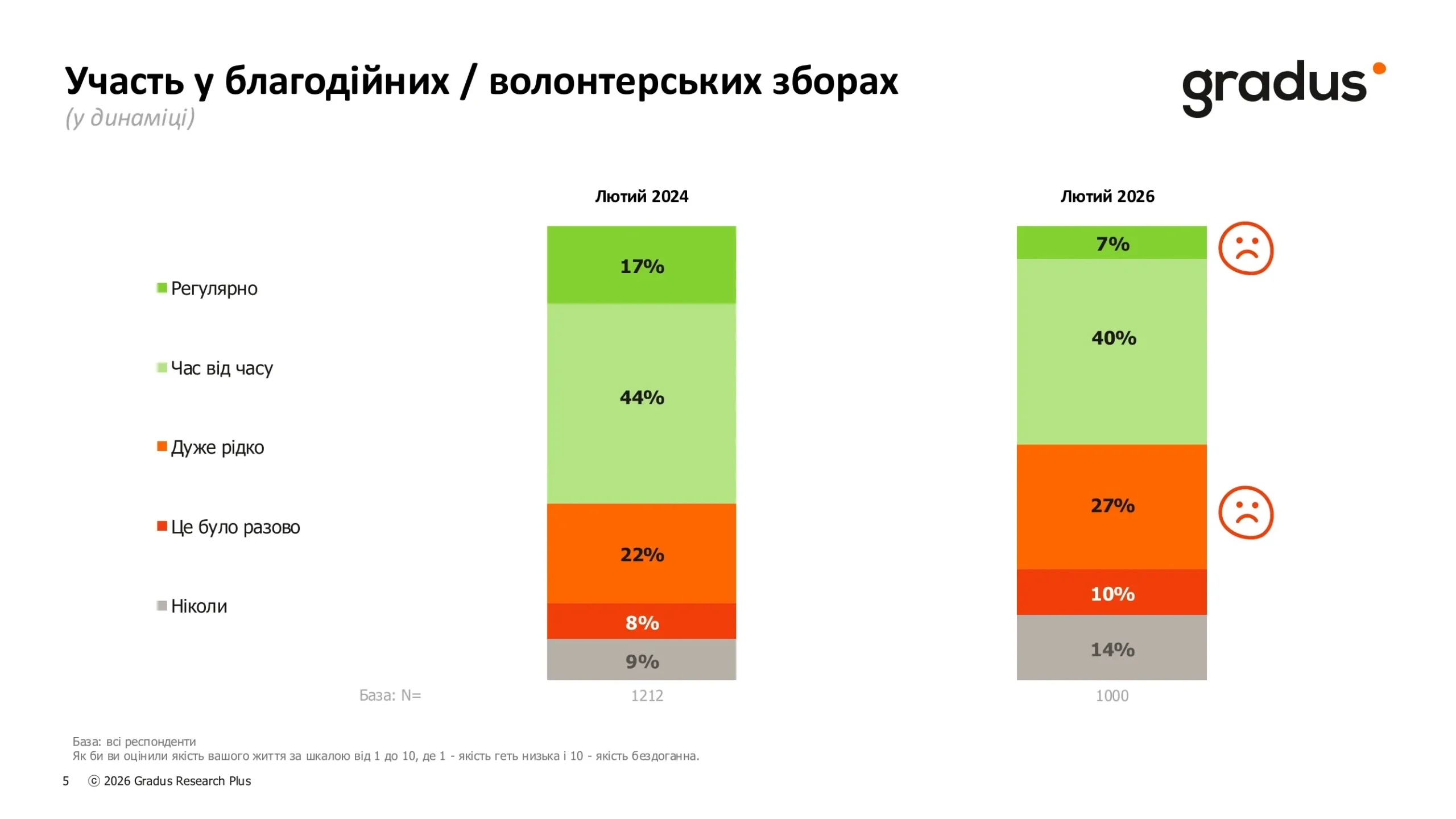
Consequently, the prolonged war and financial exhaustion of the population have influenced the level of donations. As of February 2026, 7% of respondents donate regularly, 40% support volunteer or targeted fundraising from time to time. The share of those who never donate has increased — from 9% to 14%. This indicates a change in the model — from regular financial support to more situational support, which is typical for prolonged crises.
When thinking about the future, Ukrainians are most frightened by the uncertain duration of the war. This indicator has remained almost unchanged over the past two years and is over 60%. Anxiety regarding potential financial problems, general uncertainty, and the threats of losing real estate and money as a result of the war has significantly increased.
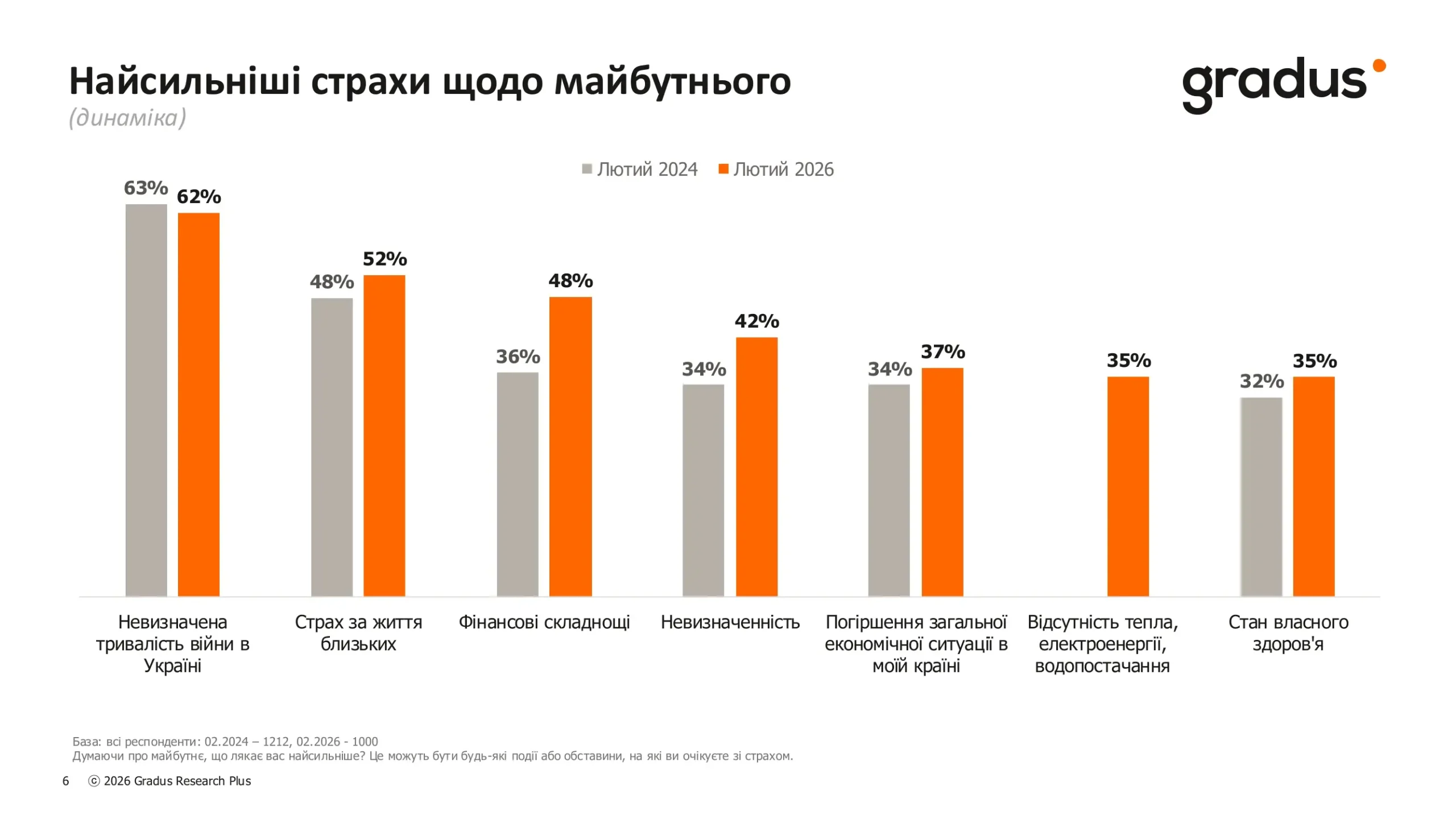
Significantly, the lack of basic living conditions — heat, electricity, and water — worries the same share of Ukrainians (35%) as the state of their own health. This indicates that basic living conditions affect the quality of life no less than physical well-being.
The most inspiring and expected news for Ukrainians has not changed over the past two years: it is an end to the war in the near future (66%), and an improvement in material well-being (40%).
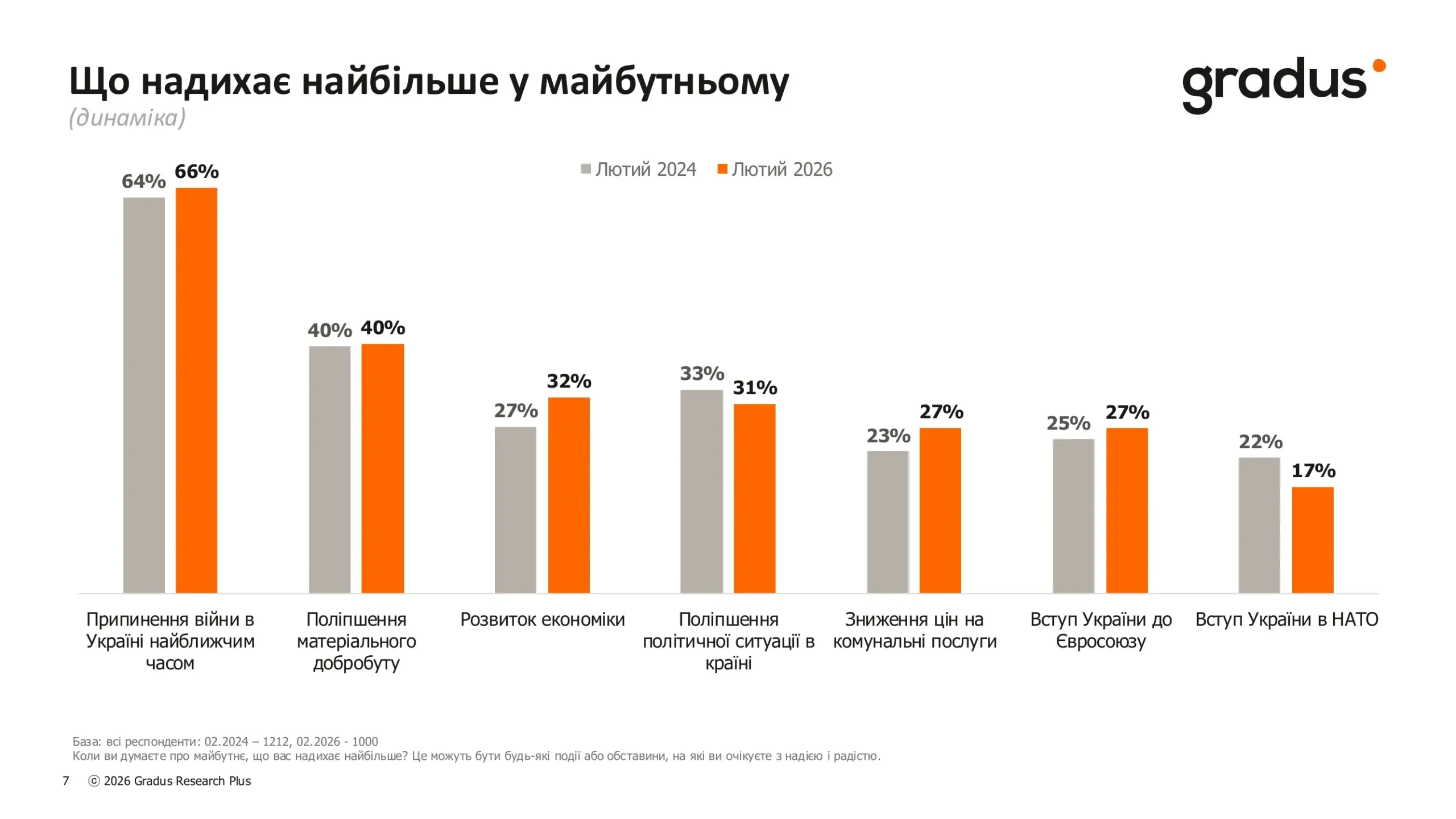
More respondents hope for economic development this year than in 2024. Regarding foreign policy prospects, expectations for EU membership have remained stable, while disappointment in NATO has lowered expectations over two years from 22% to 17%.
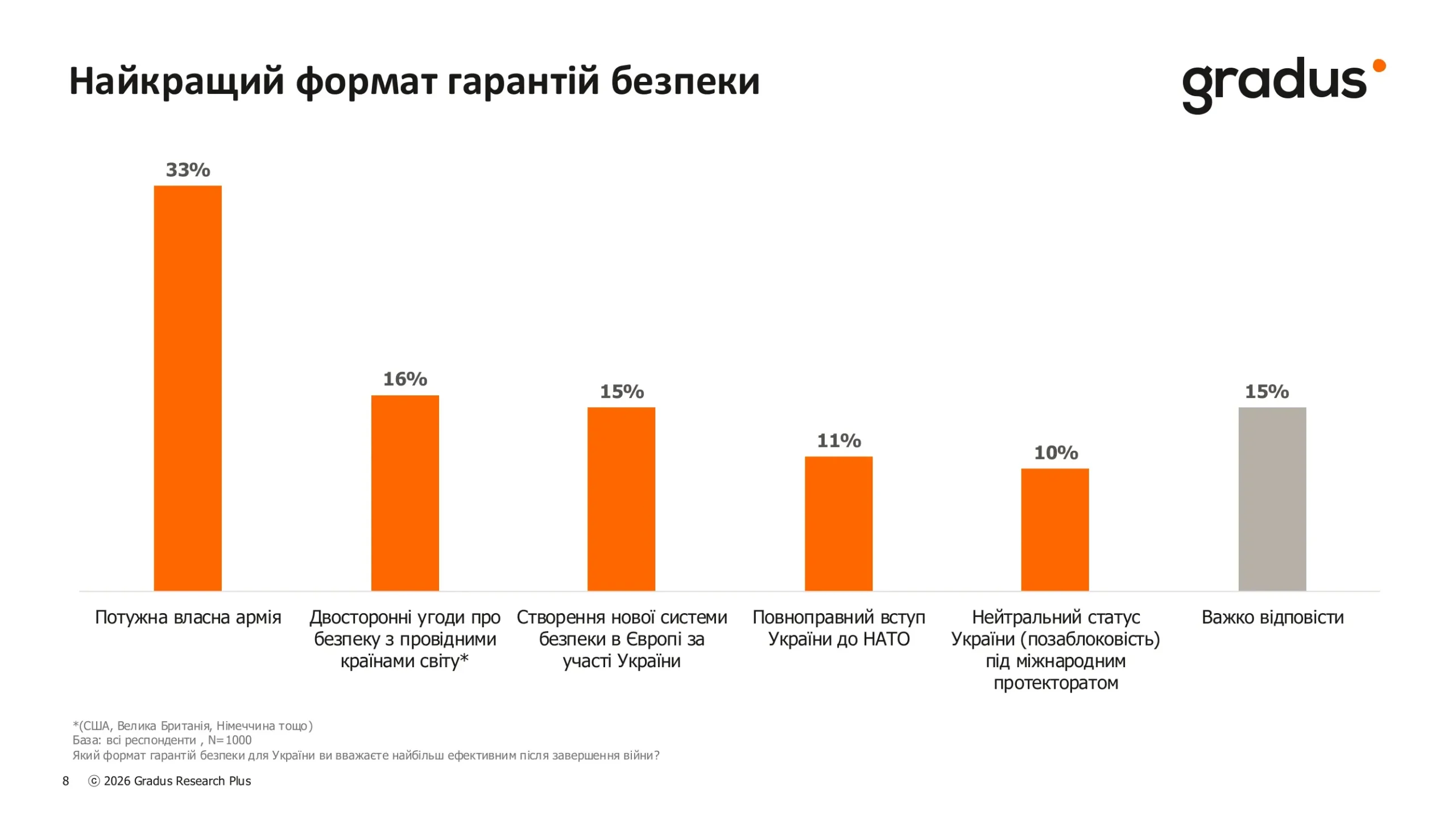
Ukrainians consider a powerful national army to be the most effective security guarantee after the war ends (33%). Security agreements with other countries, new defense alliances, and joining NATO are significantly outweighed by trust in the experience and courage of the AFU.
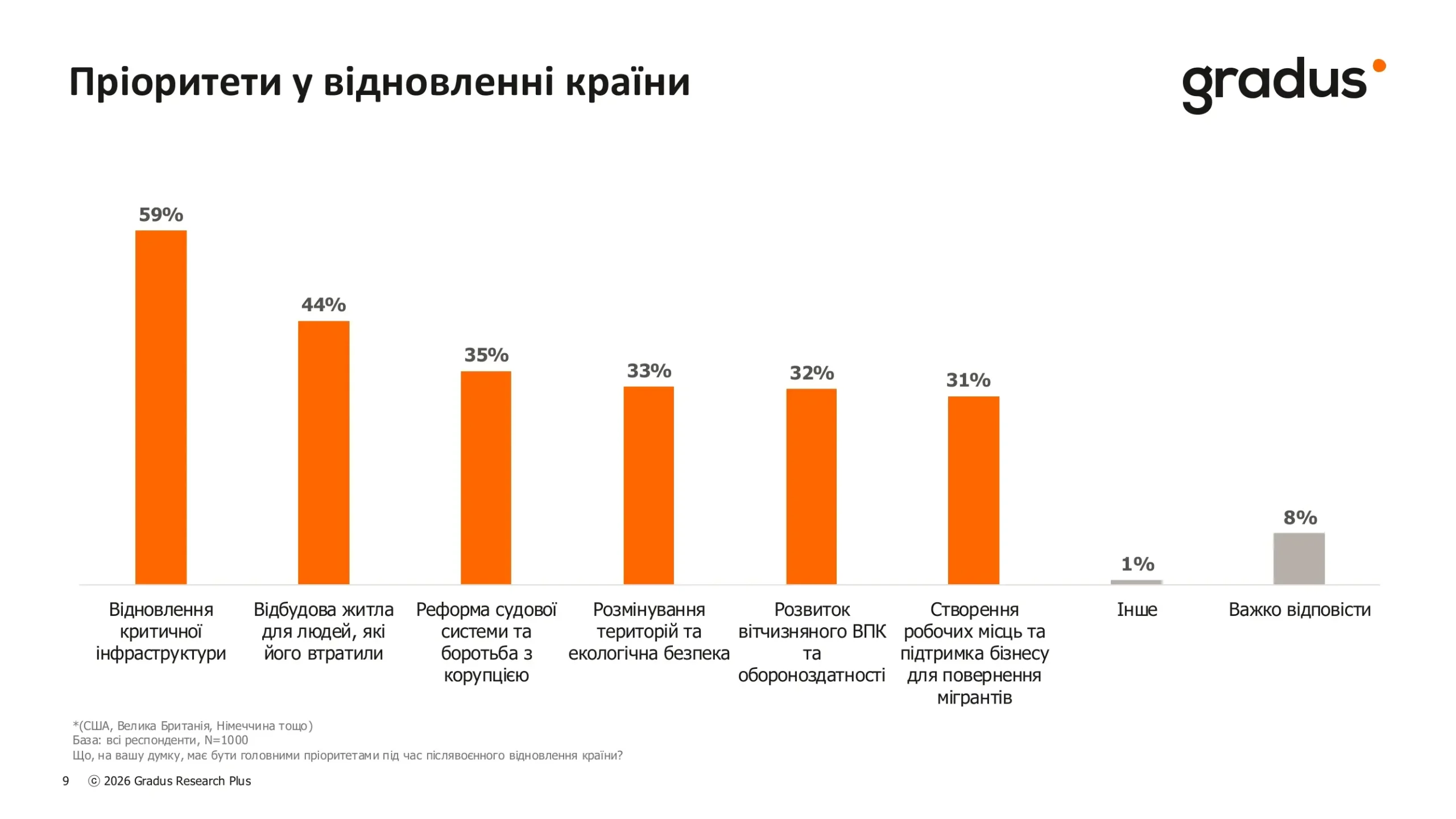
Among the main priorities for post-war recovery, surveyed citizens cite restoring critical infrastructure, rebuilding housing destroyed by the aggressor, reforming the judicial system, and fighting corruption. This indicates that, beyond physical reconstruction, Ukrainians expect serious institutional changes that will confirm the country’s European vector.
Public sentiment in Ukraine today is defined not only by war fatigue but also by a rethinking of the role of the state, institutions, and personal responsibility for the future. We see more realism in assessments and fewer illusions, but at the same time, an internal support remains — faith in the country’s ability to stand its ground and recover. Ukrainians rely increasingly on their own experience, the strength of the army, and gradual systemic changes, rather than on quick or external solutions. This testifies to the formation of a more mature, resilient, and strategic social mindset,
— notes Evheniya Blyznyuk, sociologist, founder and CEO of Gradus.
The study was conducted by the research company Gradus using the self-administered questionnaire method in the Gradus mobile application. Target audience: men and women aged 18–60 living in cities of Ukraine with a population of over 50,000, excluding temporarily occupied territories and zones of active hostilities. Fieldwork period — February 13-16, 2026. Sample size: 1000 respondents.
Table of content
Results of the “Quality of Life Barometer 2026” Study, Conducted in Collaboration with the EBA
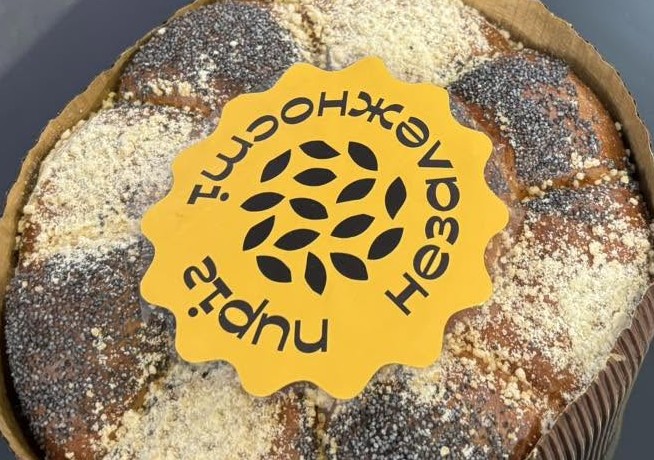
We invite Ukrainians to nominate their own pie and help create a new tradition for celebrating Ukraine’s Independence Day.
How did the public react to the government reshuffle?
How Do Ukrainians Perceive Employers and What Do They Expect from Them?

The third wave of the migration survey, presented at URC 2026
Gradus conducted a special survey for Ukraine’s Constitution Day 2026