Ukrainians’ expectations for 2026 remain cautiously optimistic. This is evidenced by the results of a Gradus survey conducted in January 2026. 62% of respondents hope for an improvement in their own financial situation throughout the year. Women show a higher level of optimism than men (65% versus 59%), and young people expect positive changes more often than older age groups: among respondents aged 18–24, 70% hold this view, while at the age of 55–60 — 50%.
Expectations for 2026
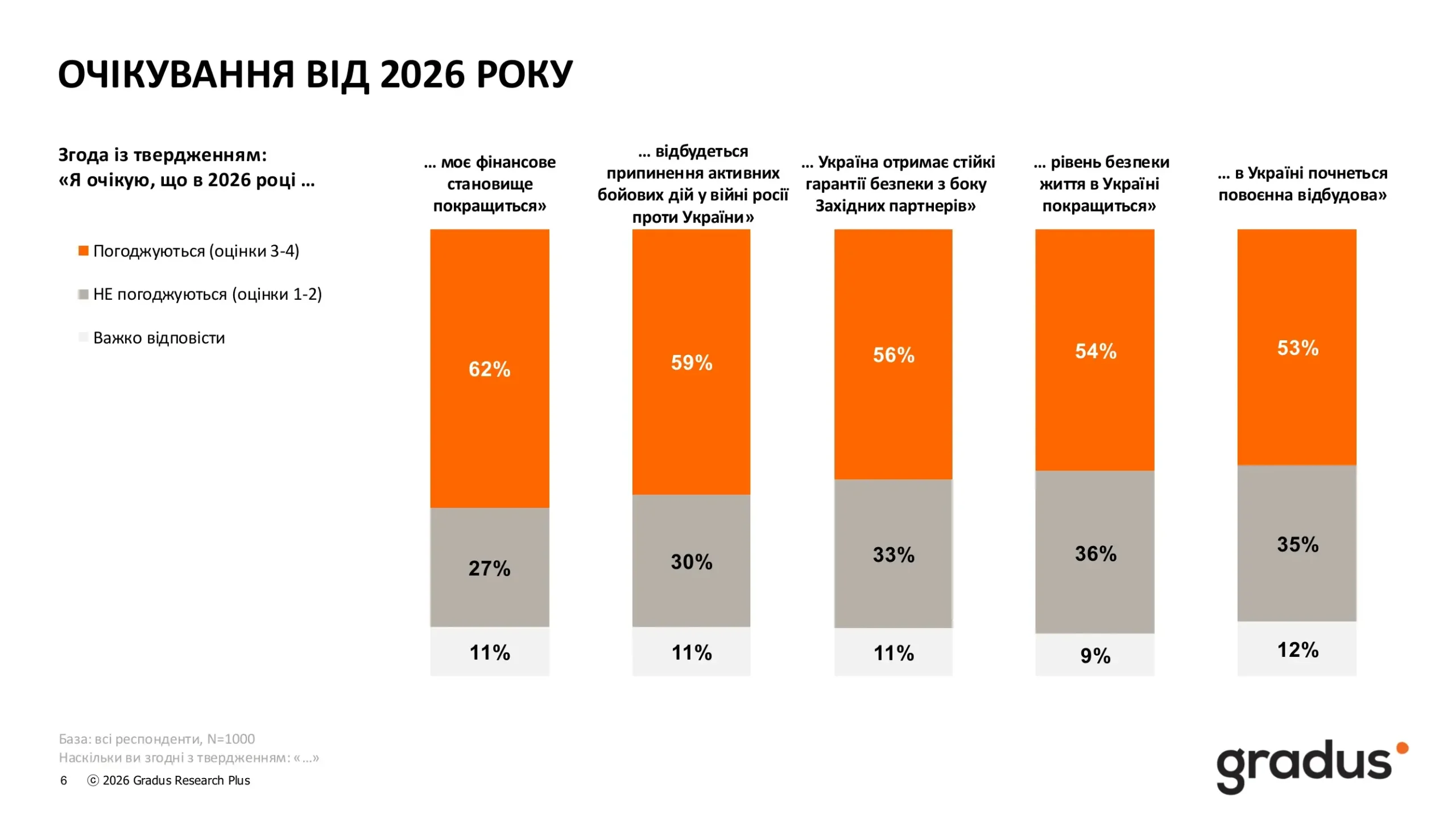
The most pressing issue at the beginning of the year remains the prospects for a peaceful settlement. 59% of Ukrainians hope for an end to active hostilities in 2026, 54% hope for an improvement in the security situation, and 53% expect the beginning of post-war reconstruction in 2026.
How the war is changing Ukrainians’ holiday traditions
Since the beginning of the full-scale invasion, Ukrainian society has shown a noticeable shift toward European traditions and the calendar of holidays. After the national-level transfer of the Christmas celebration date from January 7 to December 25 in 2023, Ukrainians are gradually changing their own family customs as well. According to Gradus research data, almost 93% of respondents are aware of the change in the Christmas celebration date.
Christmas in Ukraine: Date of celebration
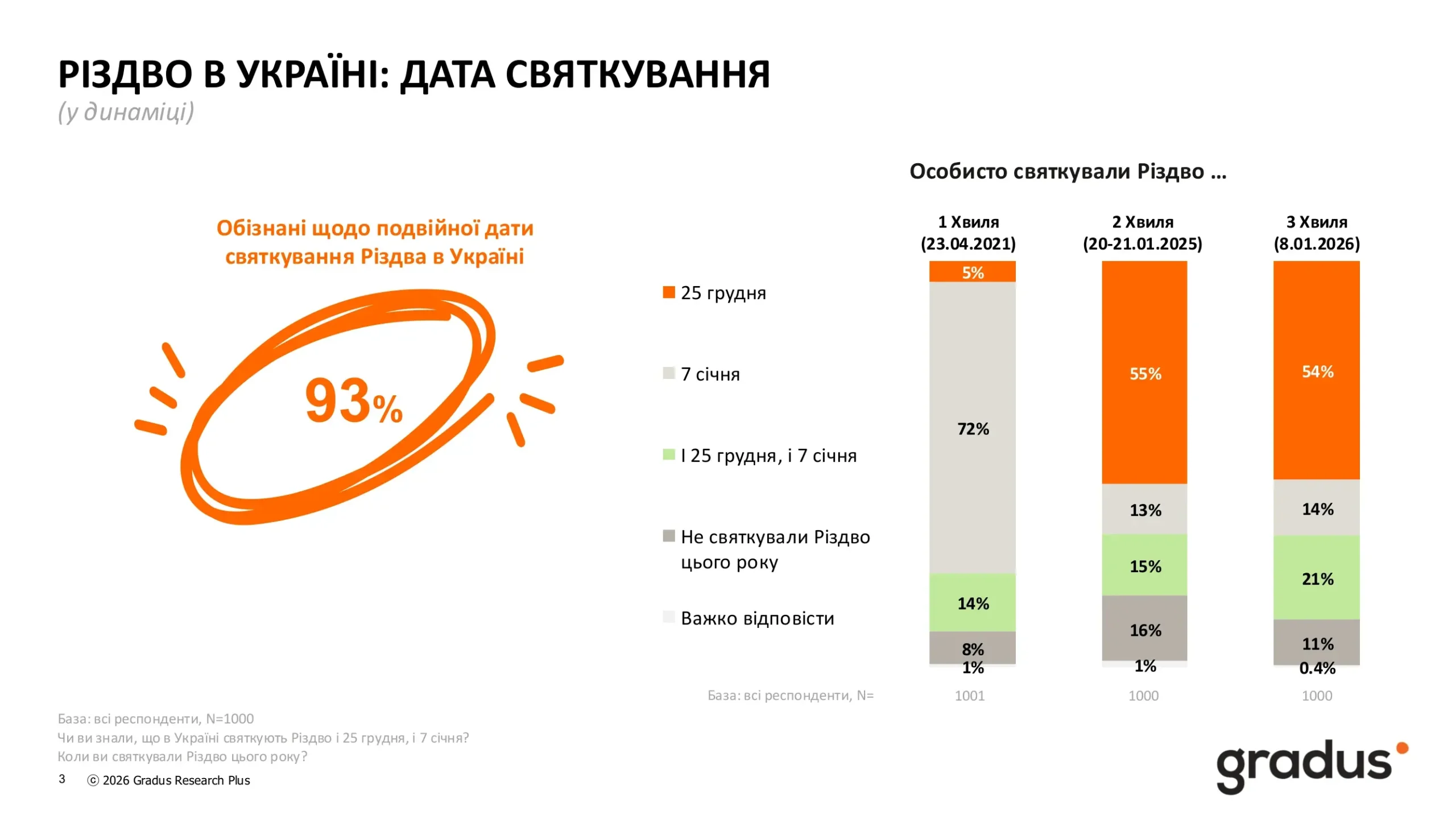
At the same time, part of the population continues to follow the old calendar or combines both dates. In 2025, 54% of respondents celebrated Christmas on December 25, 14% celebrated on January 7, and 21% on both dates. 11% of respondents did not celebrate Christmas at all. For comparison, in pre-war 2021, only 5% of Ukrainians celebrated Christmas on December 25, while 72% followed the January 7 date.
The most active in the transition to the new calendar are young people: 62% of respondents aged 18–24 celebrated Christmas on December 25 this year. The 25–34 age group showed a greater attachment to the old holiday calendar — 47%.
Despite the difficult circumstances in which Ukrainians live today, we see the preservation of cautious optimism regarding peace, financial prospects, and the country’s future. We see that migration to the new holiday calendar has progressed significantly compared to the pre-war period. This is likely driven by the desire to mentally disconnect from the aggressor country, to develop along a European vector, as well as the large number of families now separated by borders who strive to maintain unity and shared traditions,
— notes Evheniya Blyznyuk, founder and CEO of Gradus.
The study was conducted by the research company Gradus using the self-administered questionnaire method in the Gradus mobile application. Target audience: men and women aged 18–60 living in cities of Ukraine with a population of over 50,000, excluding temporarily occupied territories and zones of active hostilities. Fieldwork period — January 8, 2026. Sample size: 1000 respondents.