Fatigue has increased, fear has decreased: how the mental health of Ukrainians has changed since the beginning of the full-scale war
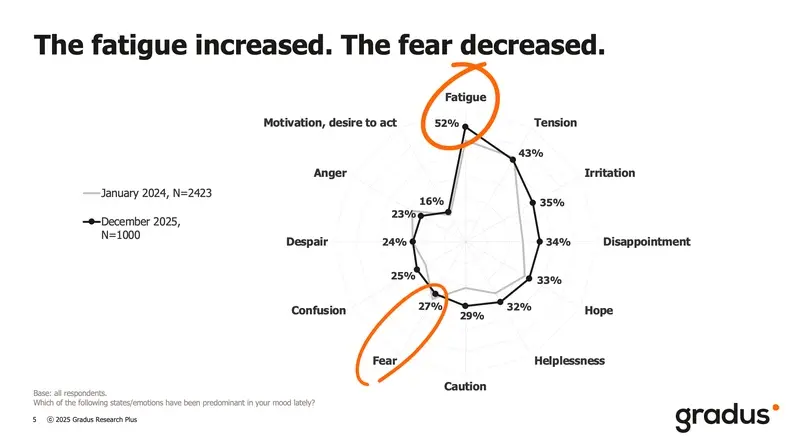
A feeling of fatigue is the dominant emotional state of Ukrainians today, while the level of fear is gradually decreasing. This is evidenced by the results of a Gradus study conducted in December 2025. Researchers compared some of the indicators with responses to similar questions from almost two years ago, in January 2024.
According to the survey results, 52% of respondents noted that they most often feel tired recently — this is the highest indicator among all emotional states. This is followed by tension (43%), irritation, and disappointment (35% and 34%). Only in fifth place is hope, noted by 33% of respondents. At the same time, researchers record: compared to data from two years ago, the level of fatigue has increased, and the level of fear has slightly decreased.
Fatigue has increased. Fear has decreased
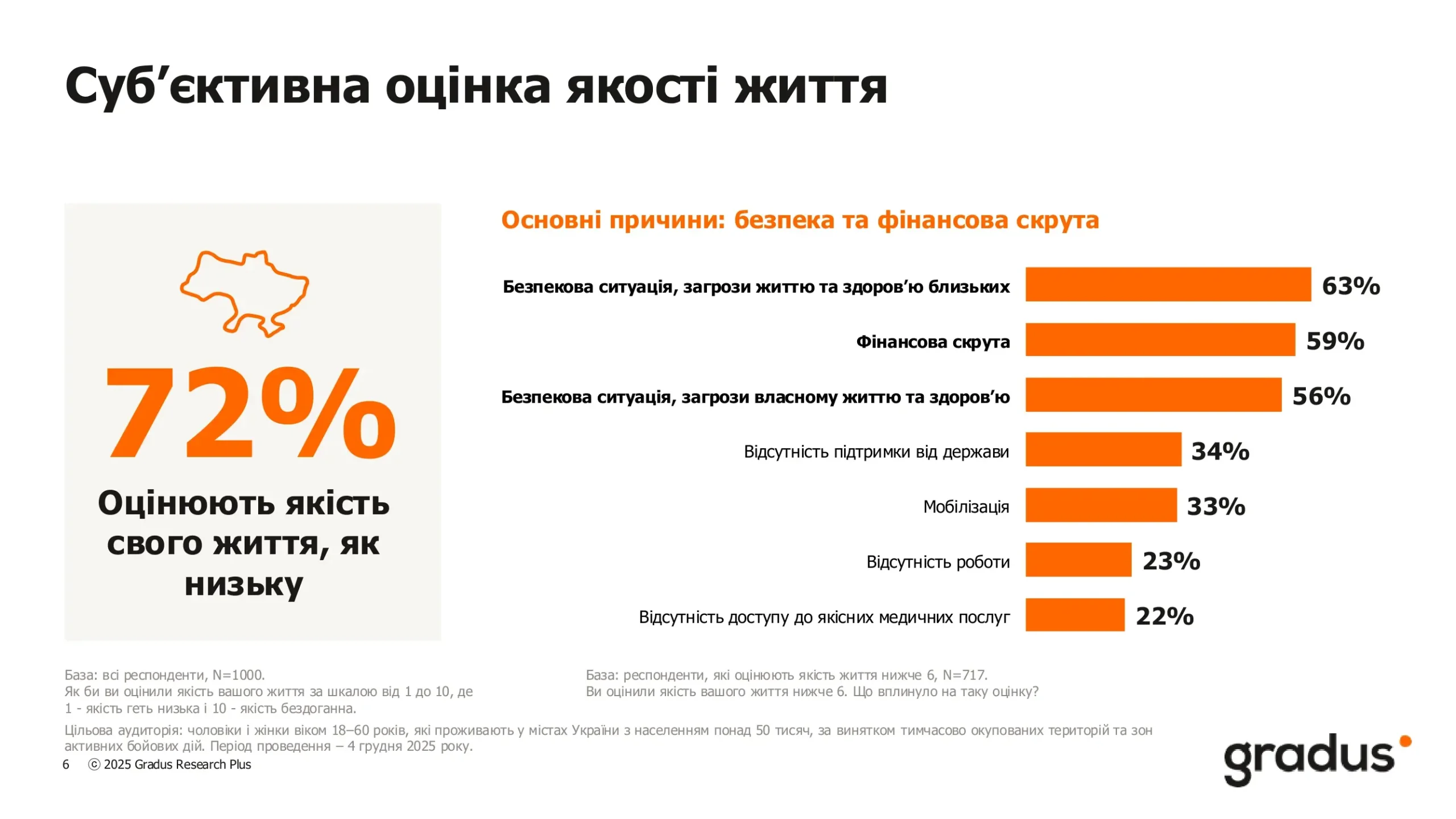
Evaluating the quality of their own lives, 72% of Ukrainians called it low. The main factors for this were the security situation and worries about the lives and health of loved ones, indicated by 63% of respondents. Another 59% noted financial difficulties, and 56% mentioned constant concern for their own safety. Mobilization (33%) and a feeling of lack of support from the state (34%) bother people noticeably less, but still quite significantly.
Subjective assessment of quality of life
Self-assessment of psychological state is also deteriorating. The share of those who consider it satisfactory decreased from 36% in 2024 to 29% in 2025. At the same time, the number of people who evaluate their state as mediocre remained almost unchanged.
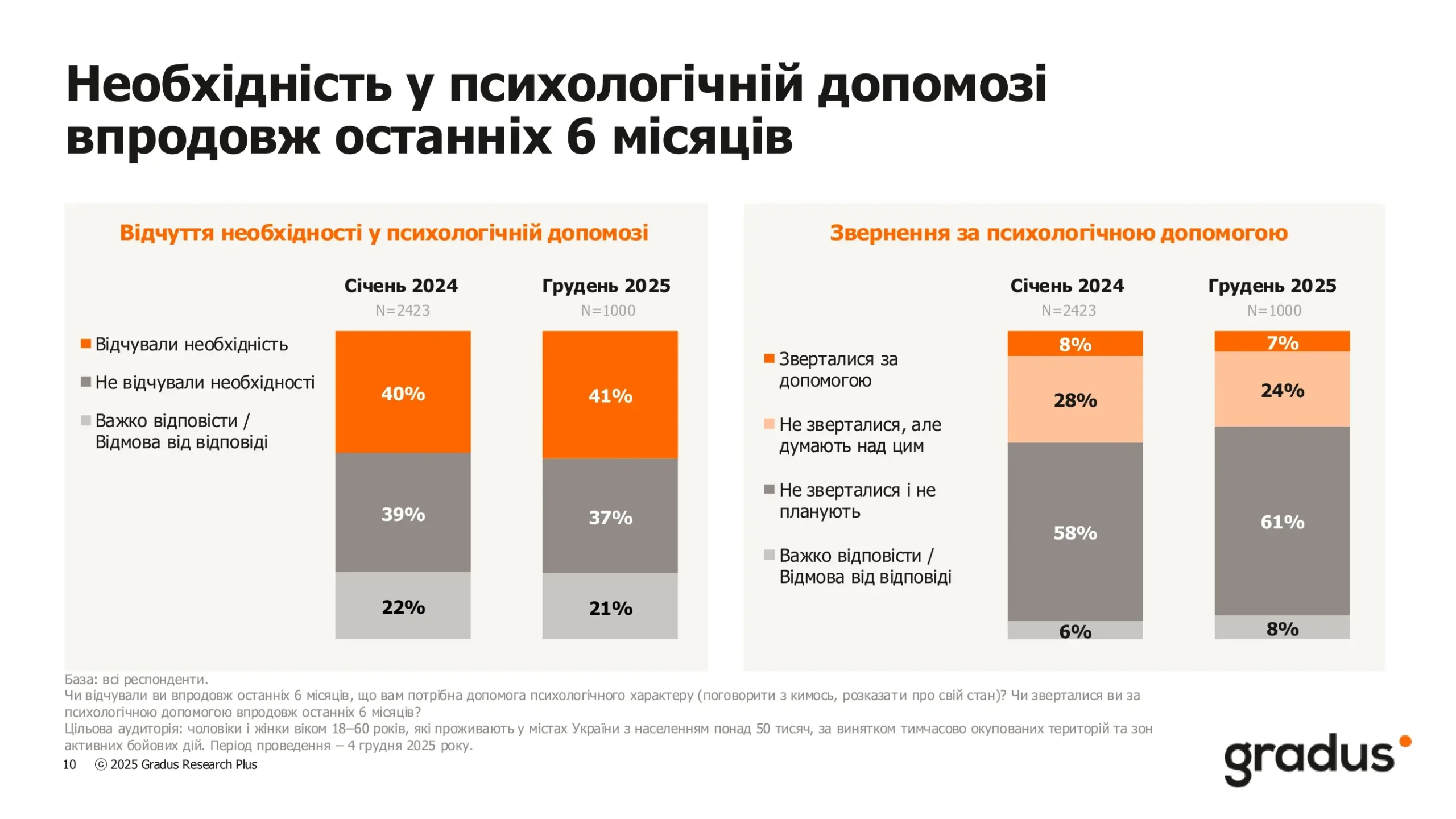
Against the backdrop of increasing fatigue, a consistently high need for psychological support remains. Over the last six months, 41% of Ukrainians have felt the need for psychological help. At the same time, actual seeking of help remains limited: only 7% of respondents reported that they had consulted specialists, while another 24% are only considering such an possibility.
Need for psychological help over the last 6 months
To cope with stress and anxiety, Ukrainians most often turn to digital entertainment: the internet, music, television, movies, and series, as well as communication with friends and family. At the same time, over the last two years, the share of those who choose favorite activities and hobbies, nature walks, and sports to stabilize their emotional state has noticeably increased.
A comparative analysis of the two periods showed a slight decrease in the level of anxiety, tension, and sleep problems. However, in parallel with this, the number of people facing complex symptoms indicating long-term stress has increased, including a lack of motivation and decreased productivity.
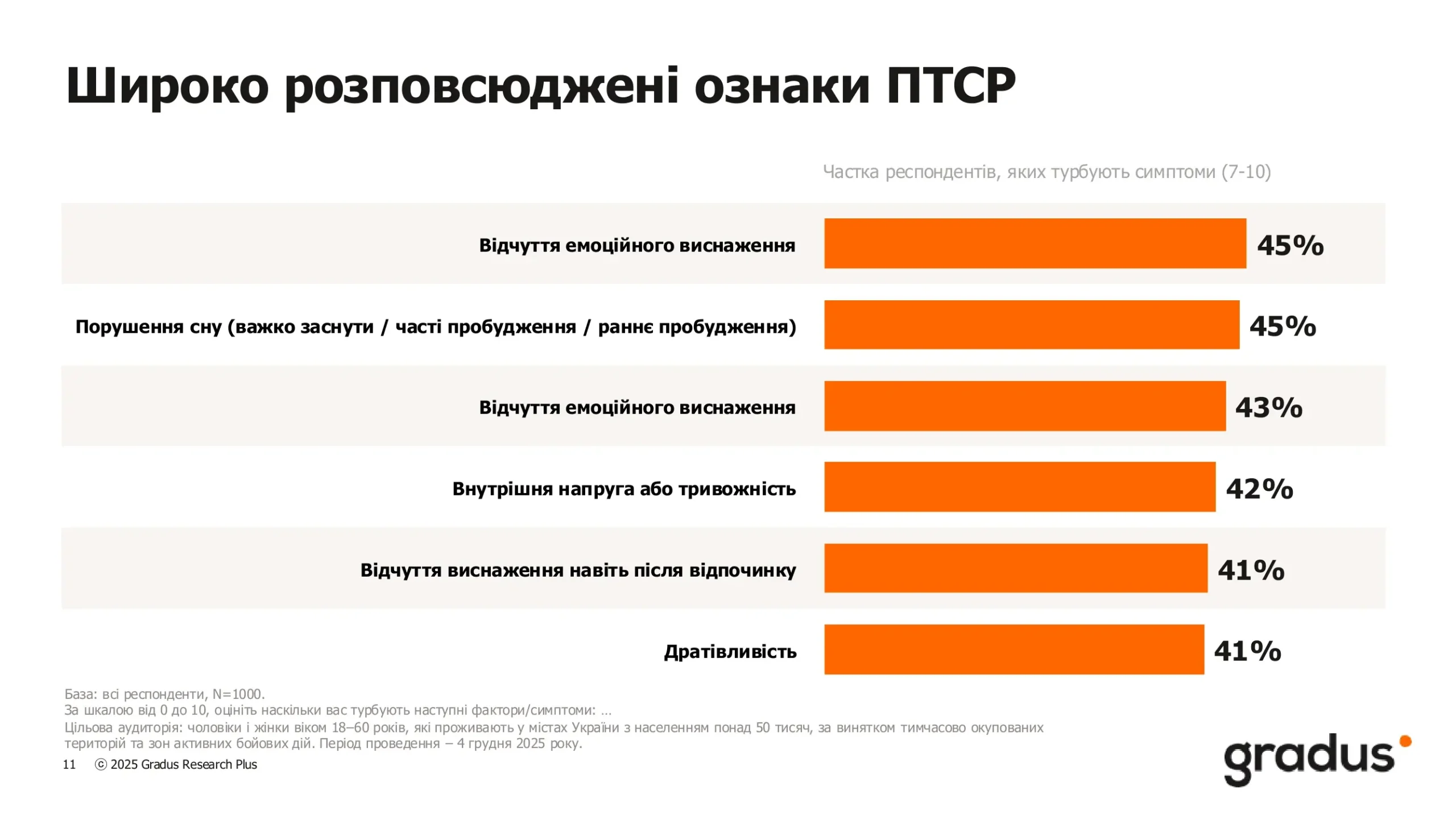
Signs that may indicate PTSD remain common. Symptoms such as emotional exhaustion, sleep disturbance, anxiety, and irritability are noted by 41% to 45% of respondents. Other manifestations of PTSD — by 30% to 37%.
Widely prevalent signs of PTSD
We see that Ukrainian society is gradually adapting to the prolonged stress of war and, in many dimensions, demonstrates relative stability. At the same time, this adaptation comes at a high cost — accumulated fatigue and the gradual exhaustion of internal resources,
— notes Evheniya Blyznyuk, founder and CEO of Gradus.
The study was conducted by the research company Gradus using the self-administered questionnaire method in the Gradus mobile application. Target audience: men and women aged 18–60 living in cities of Ukraine with a population of over 50,000, excluding temporarily occupied territories and zones of active hostilities. Fieldwork period: December 4, 2025. Sample size: 1000 respondents.
The full research report is available for download via the form below.
The “Digital Ethnography 2025” research report is available on a commercial basis upon request at dn@gradus.app
Report structure:
- Morning rituals and day structure;
- Rituals across all spheres of life;
- Eating behavior and habits;
- Stress and ways to overcome it;
- Consumer patterns and shopping;
- Media consumption and digital habits;
- Leisure and social connections;
- Urban characteristics and the context of war;
- Social activity of youth.
Want to see the bigger picture?
The “Digital Ethnography of Ukrainians 2025” report provides a deep understanding of today’s trends, but the world changes every day. To always stay up to date with public sentiments and consumer behavior, sign up for a Gradus Subscription.
A subscription is more profitable than individual reports:
- Annual access to systematic monitoring of trends;
- Relevant insights immediately after data updates;
- The ability to choose one of the ready-made packages or form your own list of reports with a discount.
Pay less — get more insights.
You can purchase the “Digital Ethnography of Ukrainians 2025” report or set up a Gradus Subscription upon request to the email dn@gradus.app