“Professional Mobility” of Ukrainians Amid the Human Capital Crisis — Special Survey by Gradus Research for KIEF 2024
Most Ukrainians consider changing professions a viable step toward improving their quality of life. Over 64% of respondents are willing to learn a new specialty to remain competitive in the job market, according to a special survey by Gradus Research conducted for the Kyiv International Economic Forum (KIEF).
High and Rising “Professional Mobility” Among Ukrainians
Ukrainians display a high willingness to adapt in the professional sphere, with 73% of respondents stating they have changed careers at least once. This reflects the flexibility and adaptability of Ukrainian workers to meet labor market challenges and respond swiftly to new opportunities.
Most Prefer to Work in Ukraine
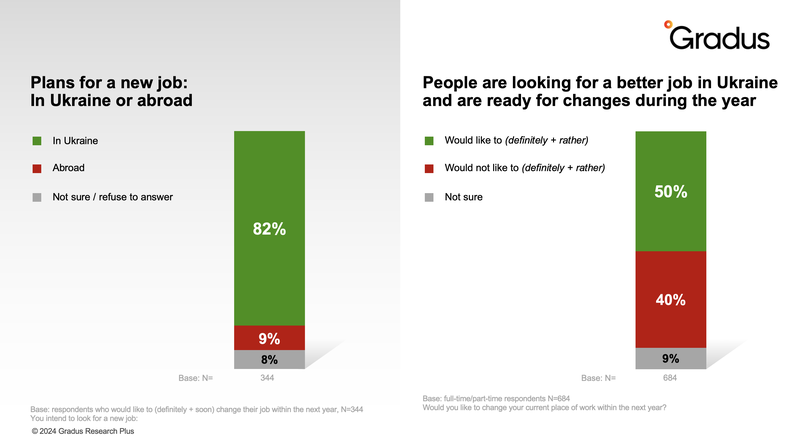
A significant majority of respondents looking to change jobs within the next year prefer employment in Ukraine, with 82% choosing this option. However, 9% are considering opportunities abroad, underscoring the importance of creating attractive job prospects domestically.
Top Factor in Job Choice — Fair Compensation
For Ukrainian respondents, a fair salary is the most critical factor when selecting a job (67%), followed by benefits (40%), official employment (40%), and comfortable working conditions (39%). The importance of salary and job stability increases with age.
Ukrainians Willing to Change Professions for Better Conditions
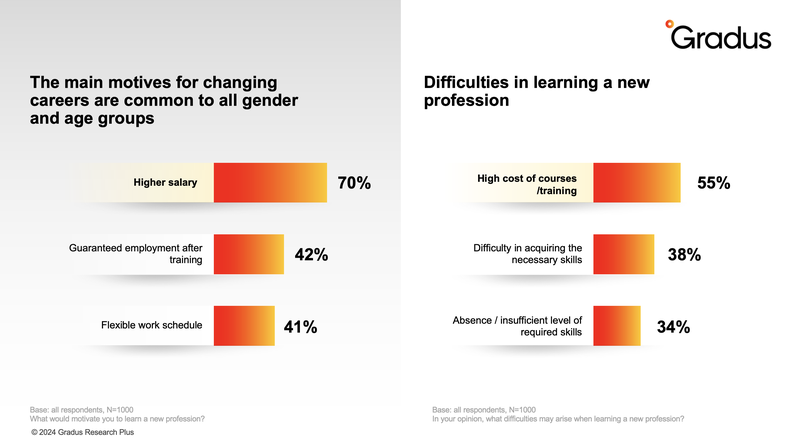
70% of respondents indicated that the primary motivation for changing professions is the potential for higher income. Other important factors include flexible work schedules and job guarantees after training. This reflects the desire of Ukrainians to balance work and personal life.
At the same time, the main barriers to acquiring a new profession, as reported by respondents, include high training costs (55%), difficulty acquiring necessary skills (38%), and insufficient skill levels (34%).
Gender Barriers Persist, Limiting Women in Traditionally “Male” Professions
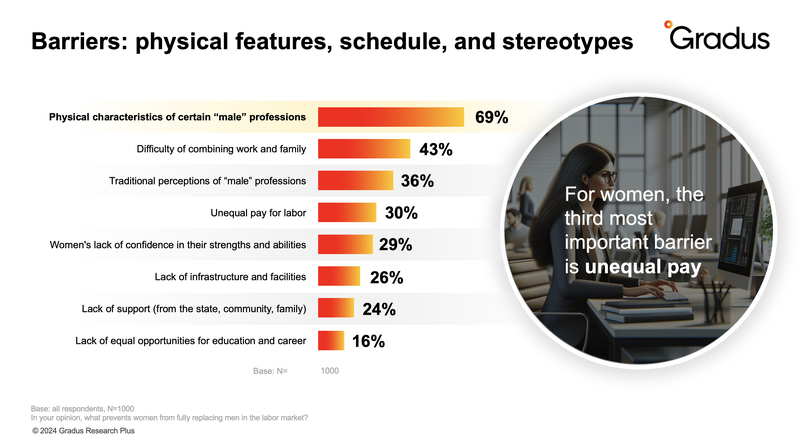
While most Ukrainians support the idea that women can work in traditionally “male” fields, barriers remain. The primary challenges for women in these professions include physical demands, balancing work and family, stereotypes, unequal pay, and lack of appropriate infrastructure.
Plans to Work Post-Retirement
A notable 70% of respondents are willing to continue working beyond retirement age if offered fair pay, flexible work hours, and access to healthcare services. This demonstrates the older generation’s desire to stay active in the workforce given supportive conditions.
“Ukrainians are well-educated and demonstrate high adaptability and readiness for change, which is a valuable asset for the country. However, every indicator we analyzed in this survey highlights the need for social support and an inclusive work environment for diverse population groups. To effectively address the human capital deficit amid prolonged war in Ukraine, it is essential to prioritize motivation — through fair pay and work conditions, adapting workplaces to people’s needs, and moving away from stereotypes,” says Evgeniya Blyznyuk, sociologist, CEO&Founder of Gradus Research.
Despite everything, Ukrainians remain highly optimistic
The vast majority of respondents believe that foreign investments (74%) and new job creation (82%) in Ukraine will resume after the end of military hostilities.
The survey was conducted by Gradus Research using a self-administered questionnaire in the Gradus mobile app. The sample reflects the structure of the population of cities with more than 50,000 residents aged 18–65 by gender, age, city size, and region, excluding temporarily occupied territories and areas with active combat operations. The fieldwork period was October 8, 2024, with a sample size of 1,000 respondents.